
Zum Hauptinhalt springen
tsecurity.de LIVE
Echtzeit-Radar & Feeds
Alle RSS Feeds
👥 Community & Social
Sichere ProgrammierungFliproom: a room changeover is a content problem(21.09.2026 um 04:10 Uhr)
Sichere ProgrammierungNova Adiutrix: My Second Agent Built My First Project's To-Do List(21.09.2026 um 04:11 Uhr)
Sichere ProgrammierungFliproom: a room changeover is a content problem(21.09.2026 um 04:10 Uhr)
Sichere ProgrammierungNova Adiutrix: My Second Agent Built My First Project's To-Do List(21.09.2026 um 04:11 Uhr)
Intelligence View
⚡ tsecurity.de Intelligence

Spatial audio comes to the Cardboard SDK

Reagiere als Erste:r — dein Feedback zählt!

Originally posted on Google Developers Blog

Posted by Nathan Martz, Product Manager, Google Cardboard

Human beings experience sound in all directions—like when a fire truck zooms by, or when an airplane is overhead. Starting today, the Cardboard SDKs for Unity and Android support spatial audio, so you can create equally immersive audio experiences in your virtual reality (VR) apps. All your users need is their smartphone, a regular pair of headphones, and a Google Cardboard viewer.

Sound the way you hear it

Many apps create simple versions of spatial audio—by playing sounds from the left and right in separate speakers. But with today’s SDK updates, your app can produce sound the same way humans actually hear it. For example:

  • The SDK combines the physiology of a listener’s head with the positions of virtual sound sources to determine what users hear. For example: sounds that come from the right will reach a user’s left ear with a slight delay, and with fewer high frequency elements (which are normally dampened by the skull).
  • The SDK lets you specify the size and material of your virtual environment, both of which contribute to the quality of a given sound. So you can make a conversation in a tight spaceship sound very different than one in a large, underground (and still virtual) cave.

Optimized for today’s smartphones

We built today’s updates with performance in mind, so adding spatial audio to your app has minimal impact on the primary CPU (where your app does most of its work). We achieve these results in a couple of ways:

  • The SDK is optimized for mobile CPUs (e.g. SIMD instructions) and actually computes the audio in real-time on a separate thread, so most of the processing takes place outside of the primary CPU.
  • The SDK allows you to control the fidelity of each sound. As a result, you can allocate more processing power to critical sounds, while de-emphasizing others.

Simple, native integrations

It’s really easy to get started with the SDK’s new audio features. Unity developers will find a comprehensive set of components for creating soundscapes on Android, iOS, Windows and OS X. And native Android developers will now have a simple Java API for simulating virtual sounds and environments.
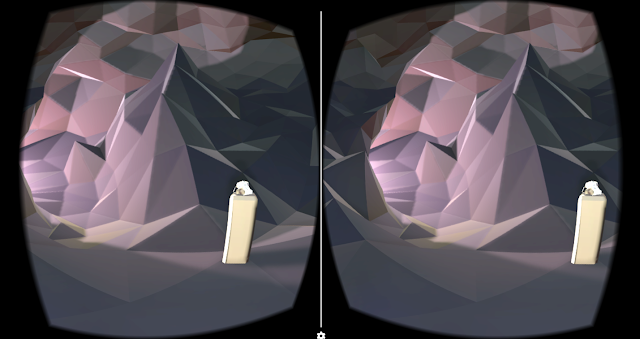

Experience spatial audio in our sample app for developers

Check out our Android sample app (for developer reference only), browse the documentation on the Cardboard developers site, and start experimenting with spatial audio today. We’re excited to see (and hear) the new experiences you’ll create!

Ähnliche Beiträge
🔍 Verwandte News

Ähnliche Beiträge zu Spatial audio comes to the Cardboard SDK

Thematisch verwandte Begriffe: Spatial, audio, comes, Cardboard · 6 Treffer

Laden...

Videos werden geladen ...

Laden...

Beiträge werden geladen ...

Laden...

Videos werden geladen ...

Laden...

Beiträge werden geladen ...

Laden...

Videos werden geladen ...

Laden...

Beiträge werden geladen ...

Laden...

Videos werden geladen ...

Laden...

Beiträge werden geladen ...

Laden...

Videos werden geladen ...

Zum Aktualisieren ziehen
ZERO-DAY CVE-2026-93977 | A vulnerability was determined in code-projects Assessment Management 1.…
Advisory →
TTS Reader • tsecurity.de Voice
tsecurity.de Icon
tsecurity.de App
Offline-Lesen, Eilmeldungen & 0ms Ladezeit

Installiere tsecurity.de direkt auf deinen Home-Bildschirm für das ultimative Vollbild-Magazinerlebnis ohne Browser-Leisten.

Nächster Beitrag
Themen-Radar & Intelligence Matrix
Echtzeit-Taxonomie nach Angriffsvektoren & Plattformen

tsecurity.de Live Threat Radar

🔴 LIVE RADAR
MONITORING
AKTIV
CVE-DATENBANK
LIVE
🔍
Community Radar & Live Chat
Sentinel Bot online • Live-Stream
Dein Cluster: Security Explorer
Match:
lädt…
Verbindung zum Community-Stream wird aufgebaut...
Bearbeitungsmodus — Senden überschreibt deine Nachricht
Community-Puls — was gerade passiert
lädt…
Aktivitäten deiner Analysten
lädt…
Neues Thema oder Eilmeldung einreichen

Reiche interessante Links, Zero-Days oder Debatten ein. Die Community entscheidet per Upvote über die Veröffentlichung.

Heiß diskutierte Einreichungen
🔖 Gespeicherte Artikel
📂 Keine gespeicherten Artikel vorhanden.
Zurück Ziehen Vor
Links: vorheriger Artikel Rechts: nächster Artikel unten: schließen
News NIS-2 Frühwarnung Tier-1 Intel ⏱️ 3 Min vor 10 Min
Artikeldaten werden geladen...

Zurück: vorheriger Vor: nächster
↗ Original-Quelle
Social Reaktionen Deine Reaktion zählt
Einstufung & Relevanz-Poll 0 Stimmen
In sozialen Netzwerken teilen 1-Klick