



Introduction
Using a project management methodology while developing software can help you achieve the project in time and will also result in a quality product. As an individual developer, we might not follow any methodology and we do just develop when we have time. However, as an organization, we must have a project management methodology that promotes collaboration and effective development.
There are various project management methodologies for software development. In particular, we are going to look into the Agile Methodologies that have become quite popular nowadays. The Agile approach has gained significant traction over the years due to its effectiveness in addressing the challenges of rapidly changing requirements, increasing customer expectations, and the need for faster delivery cycles.
Today, we are going to look into the Agile methodology. Here are the topics that will be covered.
- What is Agile Methodology?
- Core Principles
- Techniques of Agile Methodology
- Benefits
- Conclusion
So, let’s get started.
What is Agile Methodology?
In short, it is a project management methodology that uses a flexible and iterative approach to develop a project. Agility has become synonymous with success in this ever-evolving software development landscape. The traditional rigid method where we move only forward and there are no iterations has been replaced by Agile methodologies. Agile offers a more dynamic and collaborative framework that are compatible with the customer’s increasing demand.
Agile isn't just a set of practices; it's a mindset that prioritizes flexibility, collaboration, and continuous improvement. It can be represented with the below diagram that shows the iteration of the process.
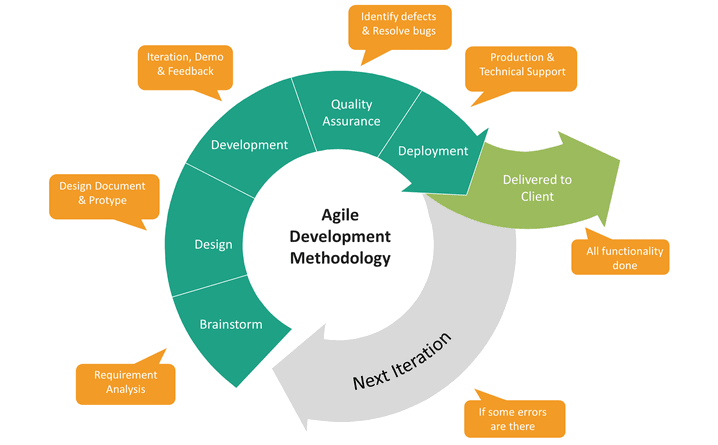
Note: The above image is by JAI G in his article, THE BENEFITS OF ADOPTING AN AGILE METHODOLOGY FOR SOFTWARE DEVELOPMENT
As you can see in the diagram, the process has an iteration to accommodate any changes by the client.
Core Principle of Agile
The core principle that drives agile can be found in the points below:
- Customer Collaboration over Contract Negotiation: Customer and stakeholders are closely involved in the project development to align the project with user needs and expectations. This helps in better understanding the requirements of the customer.
- Responding to Change over Following a Plan: With the ever-changing requirements of the client, agile is compatible with responding to any changes. It does not always follow a predefined plan but also works when there is change. Teams adapt their plans based on feedback and new information, allowing for quick adjustments to evolving requirements and priorities.
- Delivering Working Software over Comprehensive Documentation: It focuses on delivering software to the client in each iteration rather than documentation. By focusing on delivering tangible results, teams can quickly validate assumptions and gather feedback.
- Individuals and Interactions over Processes and Tools: It focuses on the importance of people and their interactions over tools and processes. Cross-functional teams collaborate closely, fostering creativity, innovation, and a sense of ownership. Rather than using numerous tools to increase efficiency, it focuses on individuals who can collaborate.
Techniques of Agile
Here are the practices and techniques of Agile methodologies:
- Iterative Development: Agile teams work in short iterations and sprints. Each iteration lasts between 1 and 4 weeks. At the end of each iteration, there are shippable products. This allows feedback from clients that can be worked on in the next iteration.
- Continuous Feedback: Agile teams gather feedback early and often, both from customers and within the team. This feedback loop drives continuous improvement and ensures that the product meets user needs.
- Adaptive Planning: Agile planning is iterative and flexible, focusing on short-term goals rather than trying to predict every detail upfront. Plans are adjusted based on feedback and changing priorities.
- Self-Organizing Teams: Agile teams are empowered to make decisions and organize their work. This autonomy fosters a sense of ownership and accountability among team members.
Agile Framework
Based on agile principles two popular frameworks are based on. Here are those:
- Scrum: It is characterized by small fixed-length iterations called sprints. Events such as sprint planning, sprint review, and daily standup are time-boxed to ensure focus. You can learn more about Scrum from here.
- Kanban: Kanban uses kanban board to manage workflow. Each column represents different stages of the development. As progress is made in the project, each task moves to the next stage of development. It is widely used to manage the workflow.
Benefits of Agile Methodology
Agile methodologies can result into a variety of benefits to the teams and organizations. Here are some of them:
- Faster Time to Market: Agile focuses on delivering the product faster. This enables teams to respond to the market faster and make changes quickly. The client can market the product with the constant changes by the team.
- Improved Quality: By delivering products in each iteration. Teams can gather feedback from clients and users faster. This enables the team to make quick improvements in the next iteration.
- Enhance Collaboration: Agile focuses on collaboration rather than tools and processes. This allows teams to have close collaboration between team members and stakeholders. This collaboration can help in better aligning the product according to the stakeholders.
- Increased Flexibility: Agile's adaptive approach allows teams to adapt to changing requirements and priorities, minimizing risks and maximizing opportunities for success.
Conclusion
Agile methodologies prioritize adaptability, collaboration, and iterative progress in software development. Embracing Agile principles such as customer collaboration and delivering working software enables teams to navigate complex projects efficiently. Through frameworks like Scrum and Kanban, Agile offers practical techniques for organizing work and fostering continuous feedback. This fosters a culture of innovation, enabling organizations to thrive amid rapid change, meet customer needs, and drive sustainable growth. Agile remains a cornerstone of effective project management, empowering teams to deliver exceptional results in today's dynamic business landscape.
I hope this article has helped you learn the Agile methodologies. Thank you for reading this article.
SOCIAL SHARE CARD GENERATOR