Posted by
Today we're releasing (AOSP). Android 14 is designed to improve your productivity as developers while enhancing performance, privacy, security, and customization for users.
Android 14 is rolling out to select Pixel devices starting today, and will be available later this year on some of your favorite devices from Samsung Galaxy, iQOO, Nothing, OnePlus, Oppo, Realme, Sharp, Sony, Tecno, vivo and Xiaomi.
Thank you for taking the time to take Android 14 for an early spin though our developer preview and beta programs, sharing your feedback, and making sure your apps deliver a great experience on Android 14. Making Android work well for each and every one of the billions of Android users is a collaborative process between us, Android hardware manufacturers, and you, our developer community.
This post covers a selection of Android 14 changes that have the most developer impact. For a complete list of all of the Android 14 changes, processes consume up to 50% less CPU cycles as compared to Android 13 public devices. Thus, background work is disallowed outside of conventional Android app lifecycle APIs such as foreground services, JobScheduler, or WorkManager.
Optimized broadcasts
To keep frozen applications frozen longer (i.e. not get CPU time), we adjusted how apps receive ; they may be queued, and repeating ones, such as .
Per-app language preferences – You can dynamically update your app's localeConfig with to know the UI language of the current app to update the keyboard language. Starting with automatically.
Regional preferences – allows you to more easily add support for users who speak languages that have grammatical gender. To show personalized translations, you just need to add translations inflected for each grammatical gender for impacted languages and integrate the API.
New media capabilities
Zoom, Focus, Postview, and more in Camera Extensions - Android 14 upgrades and improves for audiophile-level experiences over USB wired headsets.
New graphics capabilities
Custom meshes with vertex and fragment shaders - Android 14 adds support for or with , and vertex/fragment shaders written in to assist in using Android's , which is particularly helpful when your use case involves communication with the system compositor through along with additional learning opportunities around can help optimize your app across all Android surfaces, while the , , .
Improving your productivity
Android 14 contains many updates focused on making your development experience more consistent, fun, and productive. Many of these updates are being made available on older platform releases using a combination of , and (Project Mainline), over 600M devices are enabled to receive the latest Android Runtime (ART) updates that ship with Android 14. is a new Jetpack API that supports multiple sign-in methods, such as username and password, .
User experience
Predictive Back - Android 14 introduces new Predictive Back system animations – cross-activity and cross-task – to join the back-to-home animation introduced in Android 13. The system animations remain behind a animations are available to users today.
Privacy and security
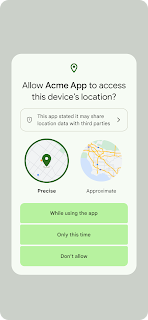

Partial access to photos and videos – When your app targeting SDK 34 requests any of the visual media permissions introduced in SDK 33 (), Android 14 users can now grant your app access to only selected photos and videos. To adapt your app to this change, we recommend following (API level 29) and higher when running in the background. To further reduce instances of unexpected interruptions, apps targeting Android 14 need to lower than 23 cannot be installed on Android 14.
Runtime receivers – Apps targeting Android 14 must indicate if dynamic .
Secure full screen Intent notifications – Since full-screen intent notifications are designed for extremely high-priority notifications demanding the user's immediate attention, Android 14 limits the apps granted this permission on app install to those that provide calling and alarms only. Your app can now launch the settings page where users can grant the permission.
Safer dynamic code loading – Apps targeting Android 14 require dynamically loaded files to be marked as read-only. with an implicit intent will throw an exception, preventing them from being able to be used to trigger unexpected code paths. Apps need to either make the pending intent immutable or make the intent explicit. .
Get your apps, libraries, tools, and game engines ready!
Now is the time to finish your final compatibility testing and publish any necessary updates to ensure a smooth app experience.
If you develop an SDK, library, tool, or game engine, it's even more important to release any necessary updates now to prevent your downstream app and game developers from being blocked by compatibility issues and allow them to target the latest SDK features. Please make sure to let your developers know if updates are needed to fully support Android 14.
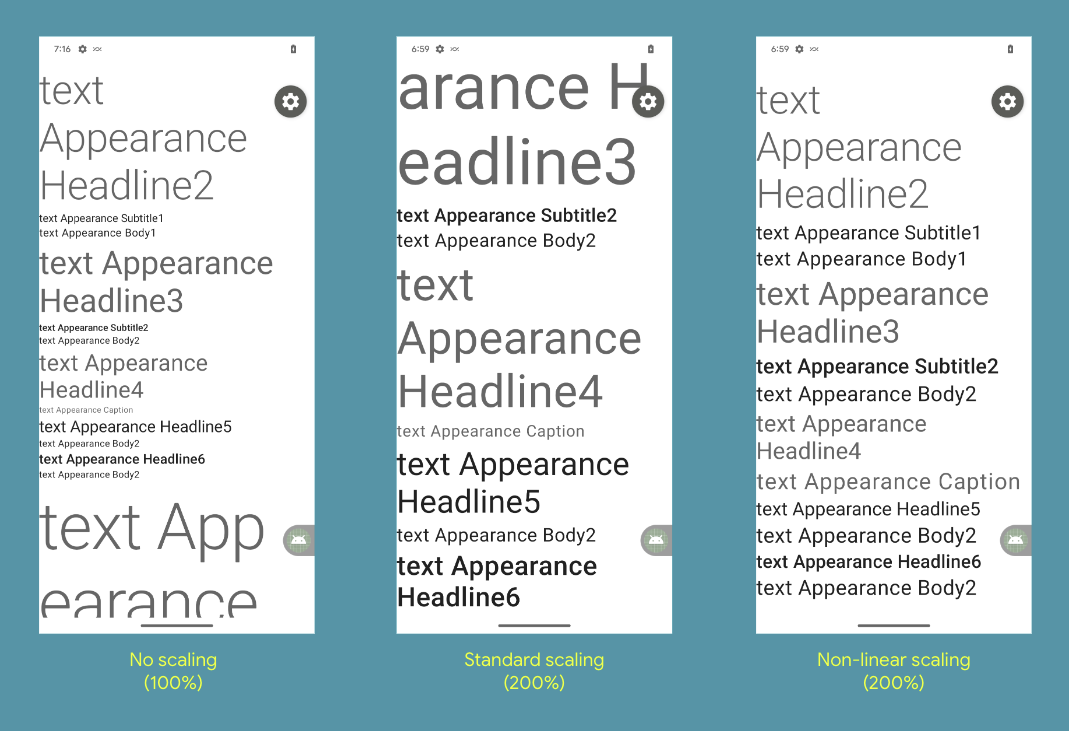
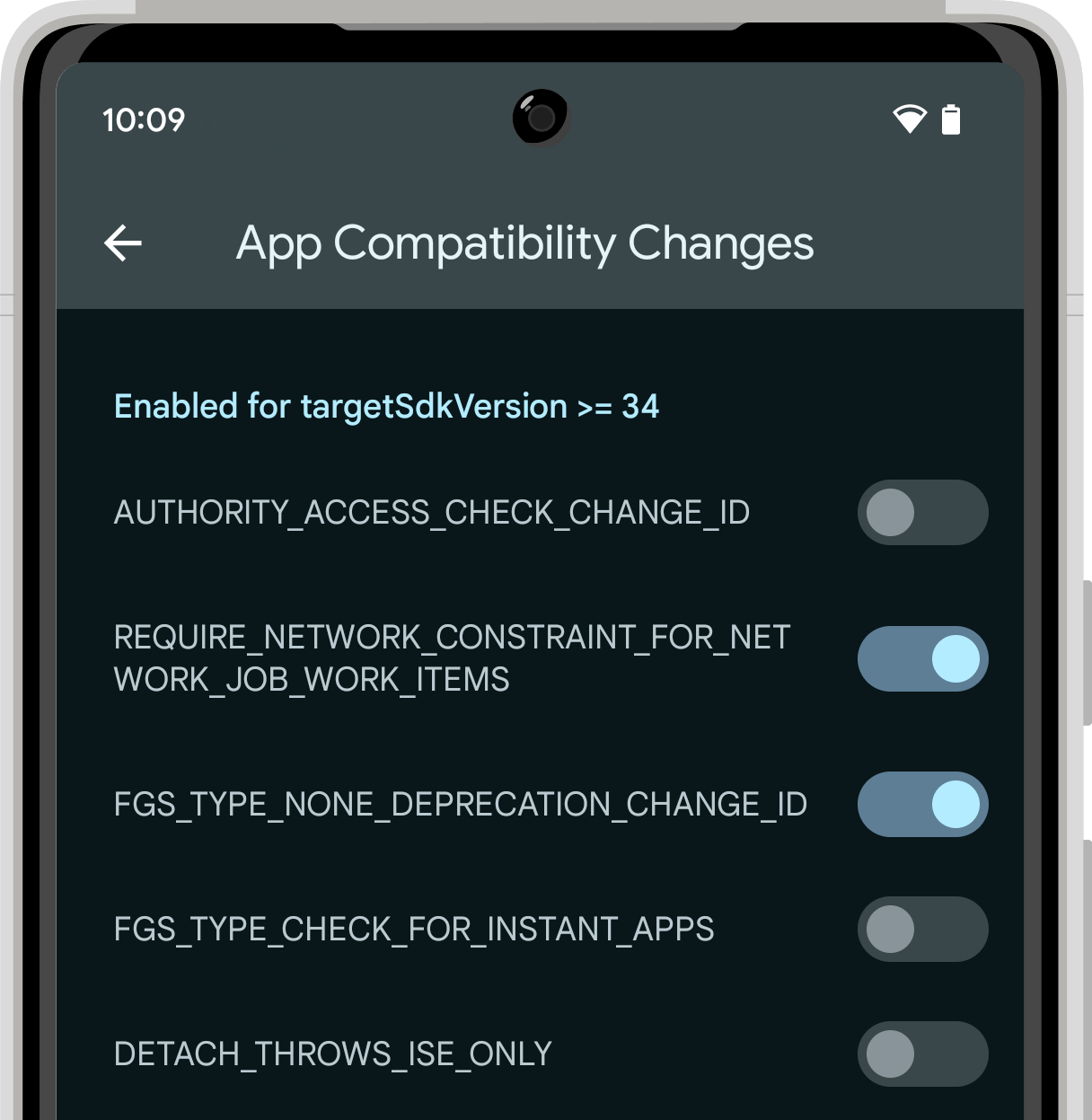
Testing your app involves installing your production app onto a device running Android 14; you can use Google Play or other means. Work through all the app's flows and look for functional or UI issues. Review the – On Android 14, the user can grant partial access to their photos and videos when an app requests any visual media permissions that were introduced in Android 13 (API level 33): . If your app already uses the using the new – On Android 14, apps that create full-screen intent notifications are limited to those that provide calling and alarms only, and the Google Play Store revokes default – Starting in Android 14, the before scheduling exact alarms. – Starting in Android 14, the system supports font scaling up of small text sizes to 200%, providing low-vision users with additional accessibility options that align with to and use the for manual download and flash, and you can get the latest 64-bit Android Emulator system images via the in the . Once you’re .
- Update your app with the Android SDK Upgrade Assistant – Android Studio Hedgehog now filters and identifies the specific Android 14 API changes that are relevant to your app, and walks you through the steps to upgrade your targetSdkVersion with the .
Java and OpenJDK are trademarks or registered trademarks of Oracle and/or its affiliates.
↗ Original-Artikel auf android-developers.googleblog.com lesenVollständiger Original-BerichtAusführliche Details, Code-Beispiele & Hersteller-Stellungnahme auf android-developers.googleblog.com.
Community-Analysen & Experten-Meinungen 0
Verwandte Story-Cluster & Quellen (Vektor-KI)
 Ähnliche Beiträge
Auch interessante Nachrichten Android 14 is live in AOSP
Thematisch verwandte Begriffe: Android, live, AOSP · 6 Treffer
Beiträge werden geladen ...
Videos werden geladen ...
Beiträge werden geladen ...
Videos werden geladen ...
Beiträge werden geladen ...
Videos werden geladen ...
SOCIAL SHARE CARD GENERATOR