New Interlock Ransomware Exploits FreeBSD servers, Demanding Huge Ransoms
Join our
Interlock Ransomware: Targeting FreeBSD Servers in Critical Infrastructure
A new ransomware strain called Interlock is emerging as a significant threat, uniquely targeting FreeBSD servers, commonly found in critical infrastructure systems. Unlike the standard Linux-based encryptors, Interlock is one of the few ransomware operations specifically developing tools to target FreeBSD, following in the footsteps of the now-disrupted Hive ransomware.
Rising Threat of FreeBSD-Specific Attacks
Interlock, launched in late September 2024, has already targeted six organizations, publishing sensitive data on its leak site when ransom demands remain unpaid. One notable victim, Wayne County, Michigan, suffered an attack earlier in October, illustrating the potential for widespread service disruption and financial impact on vital systems.
See Also: So, you want to be a hacker?
Technical Aspects of Interlock Ransomware
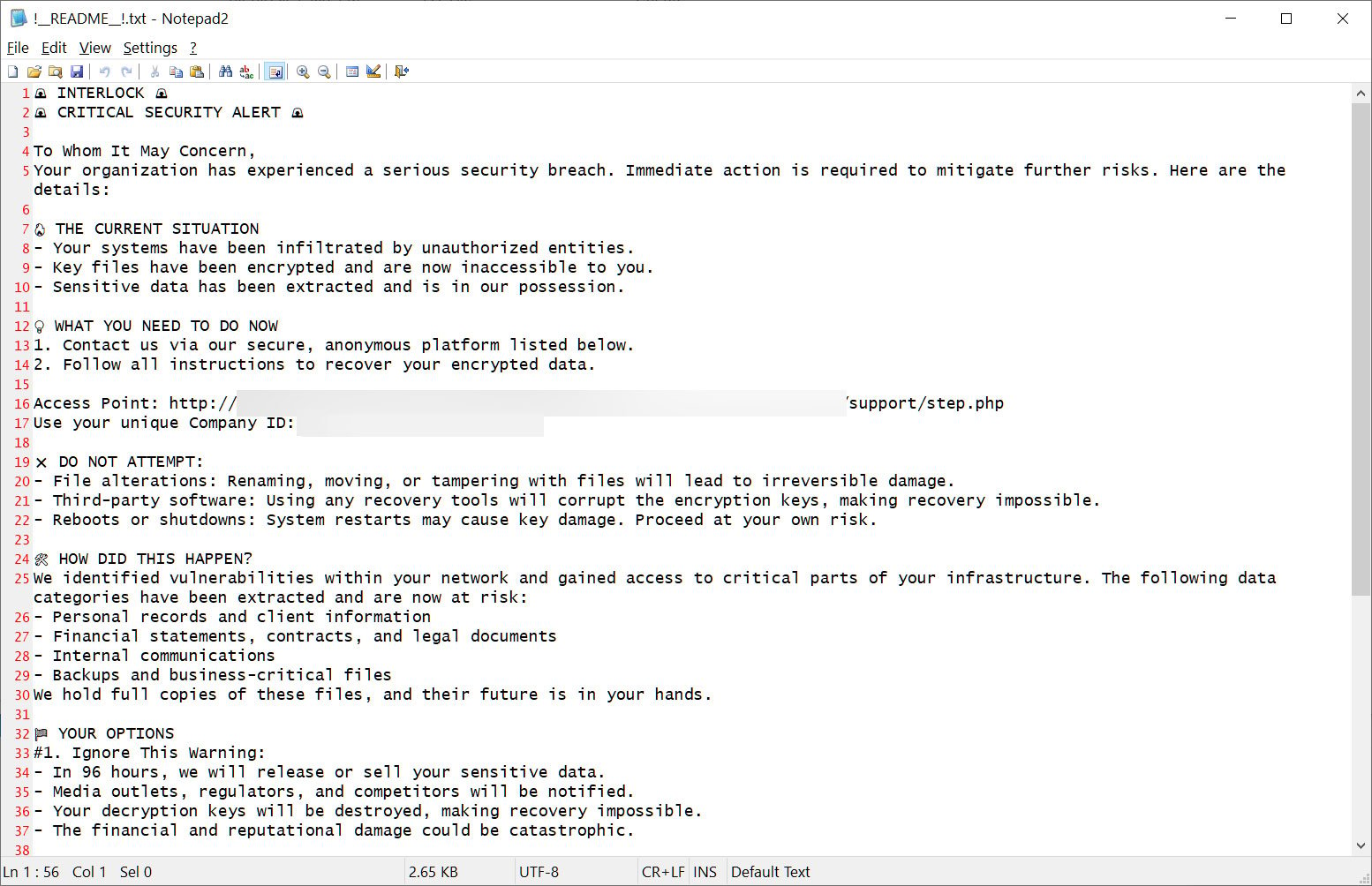 Interlock ransom note
Source: BleepingComputer
Research from Trend Micro confirms that Interlock has created both FreeBSD and Windows encryptors. The FreeBSD encryptor, identified as a 64-bit ELF file, has sparked interest due to its specificity; FreeBSD is typically employed in sectors where security is paramount, such as energy and telecommunications infrastructure.
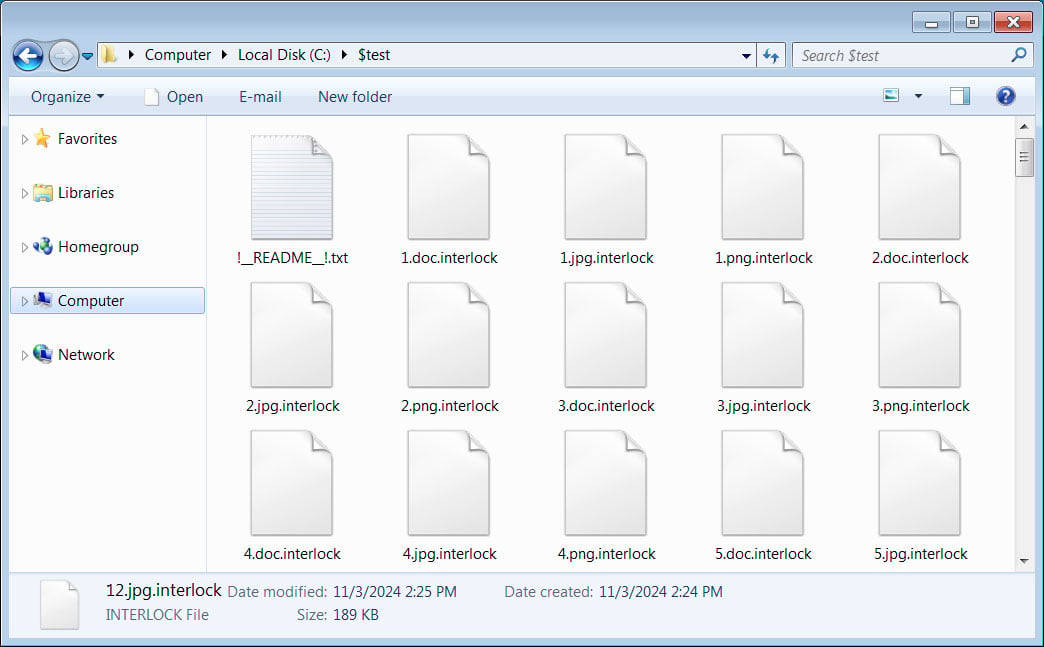 Files encrypted by Interlock
The ransomware uses a .interlock extension for encrypted files and delivers ransom notes across affected folders. Each note directs victims to a Tor-based negotiation platform featuring a chat system, where demands range from hundreds of thousands to millions of dollars, tailored to the victim’s profile.
Security Implications and Mitigations
Trend Micro attributes this unusual FreeBSD focus to the system’s extensive usage in mission-critical infrastructure, making it a prime target for cybercriminals seeking significant ransom payouts. The ransom note encourages quick payment with threats of data leakage on their site if demands are unmet. Furthermore, the Windows version of Interlock operates with efficiency, erasing Windows event logs and using DLL-based deletion tactics to obscure forensic traces.
 Interlock data leak site
Source: BleepingComputer
Trending:
Growing Importance of Securing FreeBSD Systems
As ransomware tactics grow more sophisticated, Interlock’s targeting of FreeBSD points to a pressing need for security measures on FreeBSD servers. To reduce ransomware risks, organizations must implement multi-layered security protocols and prioritize patching vulnerabilities on any FreeBSD systems critical to their infrastructure.
Trending:
Community-Analysen & Experten-Meinungen 0
Verwandte Story-Cluster & Quellen (Vektor-KI)
 Ähnliche Beiträge
Auch interessante Nachrichten New Interlock Ransomware Exploits FreeBSD servers, Demanding Huge Ransoms
Thematisch verwandte Begriffe: Interlock, Ransomware, Exploits, FreeBSD · 6 Treffer
Apple accuses OpenAI of destroying evidence as trade-secrets fight intensifies
GPT-6 Astra Release Today? OpenAI’s Next Major AI Model Is Almost Here
Videos werden geladen ...
Beiträge werden geladen ...
Videos werden geladen ...
Beiträge werden geladen ...
Videos werden geladen ...
Beiträge werden geladen ...
Videos werden geladen ...
Beiträge werden geladen ...
Videos werden geladen ...
🔖 Gespeicherte Artikel
tsecurity.de App
Installiere tsecurity.de direkt auf deinen Home-Bildschirm für das ultimative Vollbild-Magazinerlebnis ohne Browser-Leisten.
Community Radar & Live Chat
📡 Aktivitäten deiner Analysten
💡 Neues Thema oder Eilmeldung einreichen
Reiche interessante Links, Zero-Days oder Debatten ein. Die Community entscheidet per Upvote über die Veröffentlichung.
SOCIAL SHARE CARD GENERATOR