



Building a Robust Backend: From Fundamentals to Deployment
Introduction
Welcome to the world of backend development! Behind every sleek website or app lies a powerful backend, the unsung hero handling data, logic, and user interactions. This guide will walk you through the essential concepts and practical steps to build a robust backend, from understanding the basics to deploying your application.
- HTTP, DNS, IPs & Networks

The foundation of web communication is HTTP (Hypertext Transfer Protocol). DNS (Domain Name System) translates human-readable domain names into IP addresses, which are numerical labels assigned to devices on a network.
JavaScript
// Example: Making an HTTP GET and POST request using Node.js (axios)
const axios = require('axios');
axios.get('https://api.example.com/data')
.then(response => {
console.log("GET Response:", response.data);
})
.catch(error => {
console.error("GET Error:", error);
});
axios.post('https://api.example.com/data', { item: 'new item' })
.then(response => {
console.log("POST Response:", response.data);
})
.catch(error => {
console.error("POST Error:", error);
});
- APIs: The Backend’s Messenger
APIs (Application Programming Interfaces) enable communication between different software applications. They define how requests and responses are structured.
- Types of APIs
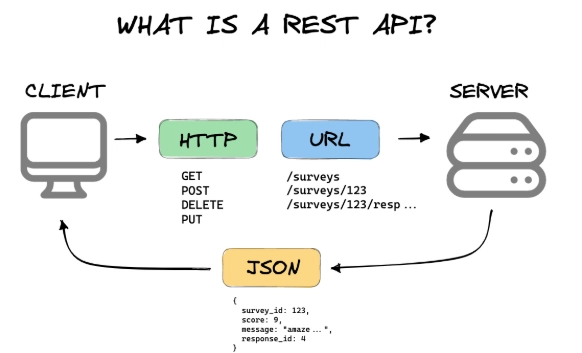
REST (Representational State Transfer): Uses standard HTTP methods (GET, POST, PUT, DELETE).
GraphQL: Allows clients to request specific data.
JavaScript
// Example: Basic REST API endpoint (Express.js) with POST route
const express = require('express');
const app = express();
let users = [{ id: 1, name: 'Alice' }, { id: 2, name: 'Bob' }];
app.get('/api/users', (req, res) => {
res.json(users);
});
app.post('/api/users', express.json(), (req, res) => {
const newUser = { id: users.length + 1, ...req.body };
users.push(newUser);
res.status(201).json(newUser);
});
- Backend Languages
Popular backend languages include Node.js, Python, Java, Ruby, and Go. Each has its strengths and weaknesses.
- Databases: The Backbone of Your Backend
Databases store and manage data. Options include relational databases (MySQL, PostgreSQL) and NoSQL databases (MongoDB).
JavaScript
// Example: Connecting to MongoDB (Mongoose) and creating a document
const mongoose = require('mongoose');
mongoose.connect('mongodb://localhost:27017/mydatabase', {
useNewUrlParser: true,
useUnifiedTopology: true,
})
.then(() => console.log('MongoDB Connected'))
.catch(err => console.log(err));
const userSchema = new mongoose.Schema({
name: String,
email: String,
});
const User = mongoose.model('User', userSchema);
async function createUser(name, email) {
const user = new User({ name, email });
await user.save();
console.log("User Saved");
}
createUser("Charlie", "[email protected]");
- Backend Architectures
Monolithic: All components are tightly coupled.
Microservices: Independent services communicate via APIs.
- Demo and Setup Tools & 8. Setup
This typically involves installing Node.js, npm, a code editor (VS Code), and MongoDB.
- Create Express Server
JavaScript
// Example: Creating an Express server and adding middleware
const express = require('express');
const app = express();
const bodyParser = require('body-parser');
app.use(bodyParser.json()); // for parsing application/json
app.listen(3000, () => {
console.log('Server listening on port 3000');
});
- Config
Configuration files store environment-specific settings.
- Routes
Routes define how the server responds to different HTTP requests.
JavaScript
// Example: POST route to create a user with validation
app.post('/api/users', express.json(), (req, res) => {
const { name, email } = req.body;
if (!name || !email) {
return res.status(400).json({ error: 'Name and email are required' });
}
// Save to database...
res.status(201).json({name, email});
});
- MongoDB
MongoDB is a NoSQL database that stores data in JSON-like documents.
- Models
Models define the structure of data in the database.
JavaScript
// Example: Mongoose model with validation
const mongoose = require('mongoose');
const userSchema = new mongoose.Schema({
name: { type: String, required: true },
email: { type: String, required: true, unique: true },
});
const User = mongoose.model('User', userSchema);
- Error Handler
Centralized error handling ensures consistent error responses.
JavaScript
//Example Error Handler
app.use((err, req, res, next) => {
console.error(err.stack);
res.status(500).json({error: 'Something broke!'});
});
- Authentication
Verifying user identities (e.g., using JWT).
JavaScript

// Example: JWT authentication with middleware
const jwt = require('jsonwebtoken');
function authenticateToken(req, res, next) {
const authHeader = req.headers['authorization'];
const token = authHeader && authHeader.split(' ')[1];
if (token == null) return res.sendStatus(401);
jwt.verify(token, 'secretkey', (err, user) => {
if (err) return res.sendStatus(403);
req.user = user;
next();
});
}
app.get('/protected', authenticateToken, (req, res) => {
res.json({ message: 'Protected route accessed by user', user: req.user });
});
const token = jwt.sign({ userId: 123 }, 'secretkey');
- Authorization
Controlling user access to resources based on roles.
- Arcjet
Arcjet helps protect APIs from abuse and bots.
- Subscriptions
Implementing subscription-based features.
- Reminder Workflow
Automating tasks and sending reminders using tools like cron jobs or message queues.
- Send Emails
Integrating email functionality using libraries like Nodemailer.
JavaScript
// Example: Sending an email using Nodemailer with HTML content
const nodemailer = require('nodemailer');
const transporter = nodemailer.createTransport({
service: 'gmail',
auth: {
user: '[email protected]',
pass: 'your_password',
},
});
const mailOptions = {
from: '[email protected]',
to: '[email protected]',
subject: 'Hello from Node.js',
html: 'This is a test email with HTML!',
};
transporter.sendMail(mailOptions, (error, info) => {
if (error) {
console.error(error);
} else {
console.log('Email sent: ' + info.response);
}
});
- VPS Hosting & Deployment
Deploying the backend to a VPS (e.g., AWS EC2, DigitalOcean Droplets).
This post provides a foundational overview of backend development. Each topic can be explored in much greater depth. Remember to adapt code examples to your specific needs and technologies.
SOCIAL SHARE CARD GENERATOR