



The Secret Cost of Microservices: Why Your ‘Scalable’ Architecture is Draining Engineering Morale 😓
The Hidden Human Toll of Distributed Systems
🔄 “We migrated to microservices for agility!”
📈 “Our system scales infinitely now!”
⚙️ “Every team owns their services independently!”
Then why is your engineering team burned out and your velocity slowing down?
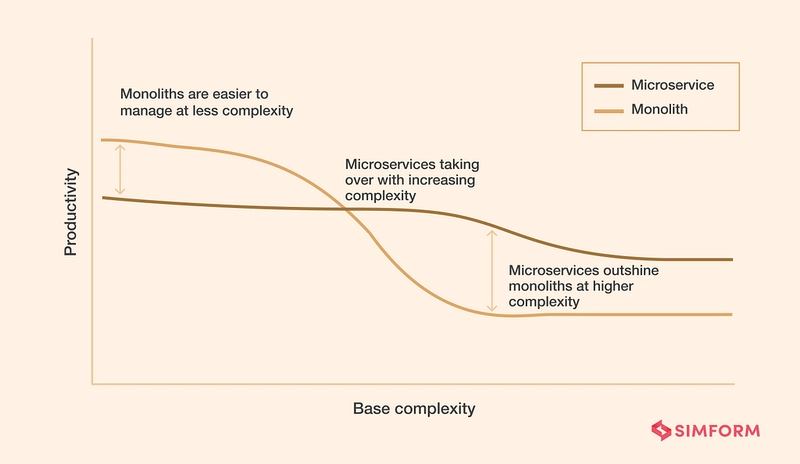
After working with dozens of companies that adopted microservices, I’ve discovered an uncomfortable truth: Most microservice implementations create more problems than they solve. Here’s how your “modern” architecture might be sabotaging your team.
1. The Myth of Independent Development
The Promise vs Reality
Promised BenefitActual Outcome”Teams can deploy independently””We need 5 services to release one feature””No more coordination!””Daily cross-team syncs for API changes””Faster iteration!””Spend 80% time debugging distributed systems”

Case Study: A mid-sized company adopted microservices and saw:
- 40% increase in deployment frequency…
- But 3x longer feature development cycles due to coordination overhead
2. The 5 Silent Productivity Killers
🕳️ 1. Distributed Debugging Hell
- Traces spread across 5 systems
- “It works in test but fails in prod” becomes 10x harder
- Engineers need to understand 15 services to fix one bug
📉 2. The Testing Illusion
- 100% test coverage on each service…
- But zero tests for cross-service workflows
- “We didn’t realize Service A would break Service B’s cache”
🔄 3. Deployment Synchronization
- “Independent deployments” require careful orchestration
- Feature flags become a distributed system themselves
- Rollbacks now require coordinated multi-service efforts
📊 4. Observability Overload
- 30 dashboards but no unified view
- Alerts fire constantly from downstream services
- “Is this our problem or someone else’s?”
💸 5. The Talent Tax
- New engineers take 6 months to become productive
- Senior devs spend all time mentoring instead of coding
- Constant context switching destroys deep work
3. When Microservices Make Sense (And When They Don’t)
✅ Good Candidates
- Clear domain boundaries (payment vs inventory)
- True scale needs (100k+ RPS)
- Mature platform/SRE team
❌ Bad Candidates
- Small teams (< 15 engineers)
- Rapidly evolving product
- No existing monolith problems
Rule of Thumb: If you can’t draw your service boundaries on a napkin without ambiguity, you’re not ready.

4. The Modest Alternative: Modular Monoliths
The Architecture Everyone Forgot
- Single deployable unit
- Clear internal modules
- Shared database with bounded contexts
Benefits:
- 90% of microservice advantages
- 10% of the complexity
- Works beautifully for 80% of companies
Case Study: A team migrated from 22 microservices to a modular monolith and saw:
- 60% reduction in production incidents
- 2x faster feature development
- New engineers productive in days instead of months
5. The Microservices Litmus Test
Ask your team:
- Can most engineers name all our services and their purposes?
- Do we regularly deploy services independently?
- Is cross-service coordination <10% of our time?
- Can new hires ship to prod in their first week?
If you answered “no” to any, you’re paying the microservices tax without getting the benefits.
Final Thought: Architecture Should Serve People, Not Vice Versa
The best architecture is the simplest one that solves your actual problems — not the one that looks best on an engineering blog.

💬 Has your team fallen into the microservices trap? What architecture lessons have you learned the hard way? Let’s discuss!