
Zum Hauptinhalt springen
tsecurity.de LIVE
Echtzeit-Radar & Feeds
Alle RSS Feeds
👥 Community & Social
Windows Tipps & SecurityLernen Sie Linux-Befehle mit Webminal direkt im Browser(24.09.2026 um 08:00 Uhr)
Sicherheitslücken (CVE)USN-8811-1: urllib3 vulnerability(24.09.2026 um 03:39 Uhr)
Sichere ProgrammierungYour Agent Has Observability. It Doesn't Have Evals.(24.09.2026 um 07:43 Uhr)
Sichere ProgrammierungProtocol Upgrade Compatibility Review: Robinhood(24.09.2026 um 07:45 Uhr)
Sichere ProgrammierungYour tests share your blind spots. Readers don't.(24.09.2026 um 07:52 Uhr)
Sichere ProgrammierungYour AI agent has more permissions than your users(24.09.2026 um 07:54 Uhr)
Windows Tipps & SecurityLernen Sie Linux-Befehle mit Webminal direkt im Browser(24.09.2026 um 08:00 Uhr)
Sicherheitslücken (CVE)USN-8811-1: urllib3 vulnerability(24.09.2026 um 03:39 Uhr)
Sichere ProgrammierungYour Agent Has Observability. It Doesn't Have Evals.(24.09.2026 um 07:43 Uhr)
Sichere ProgrammierungProtocol Upgrade Compatibility Review: Robinhood(24.09.2026 um 07:45 Uhr)
Sichere ProgrammierungYour tests share your blind spots. Readers don't.(24.09.2026 um 07:52 Uhr)
Sichere ProgrammierungYour AI agent has more permissions than your users(24.09.2026 um 07:54 Uhr)
Intelligence View
⚡ tsecurity.de Intelligence

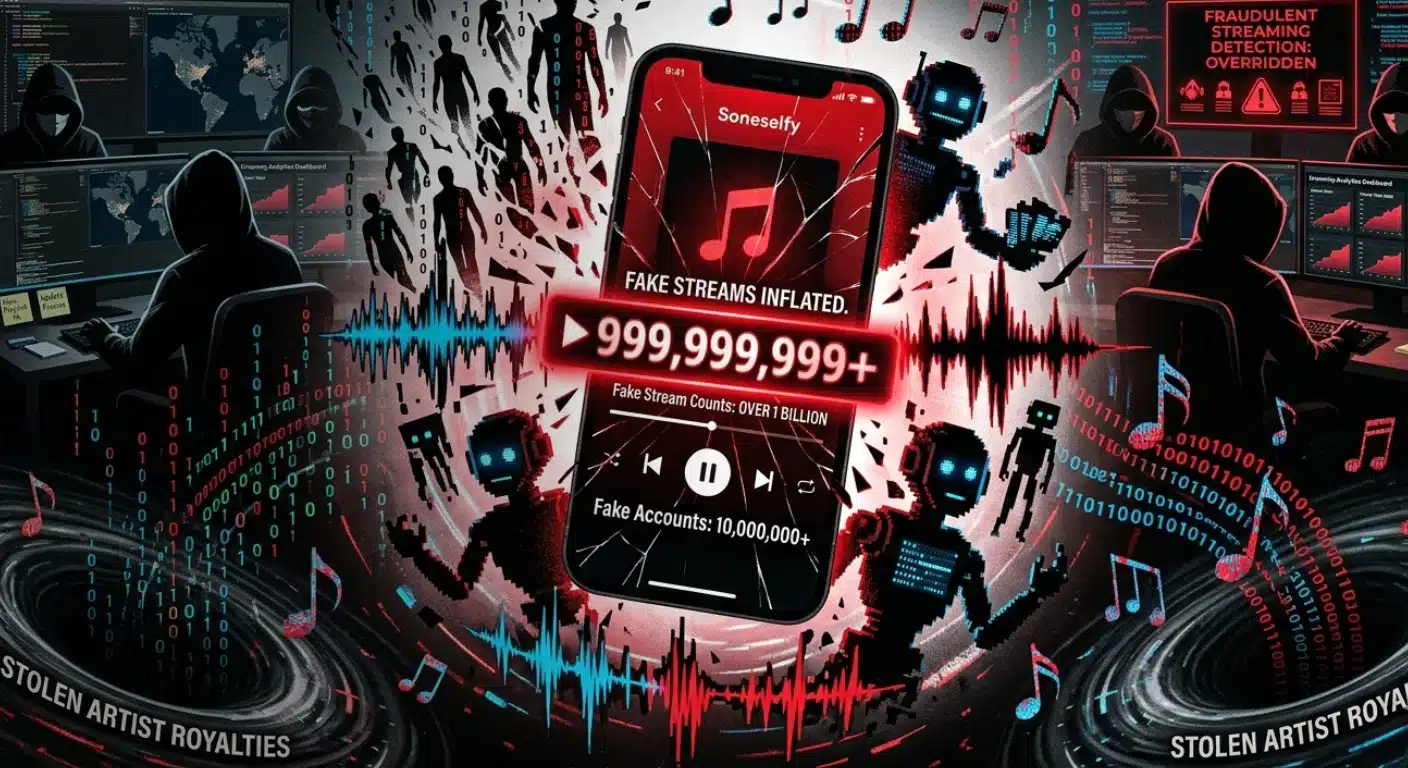
U.S. Man Admits to $8M Fake Music Streaming Scheme Using Bots and AI

AI-assisted fraud is no longer a distant risk for digital platforms, it is already reshaping how systems can be exploited. A North Carolina man’s guilty plea in a multi-million dollar music streaming scheme shows just how easily artificial …

0
↗ Quelle (thecyberexpress.com)
Reagiere als Erste:r — dein Feedback zählt!

AI-assisted fraud

AI-assisted fraud is no longer a distant risk for digital platforms, it is already reshaping how systems can be exploited. A North Carolina man’s guilty plea in a multi-million dollar music streaming scheme shows just how easily artificial intelligence can be used to manipulate royalties at scale.

Michael Smith, 54, admitted to running a fraud operation that used AI-generated songs and automated bots to game music streaming platforms. The scheme brought in over $8 million in royalties, diverting earnings away from legitimate artists.

How AI-assisted Fraud Worked


Music streaming platforms pay royalties based on the number of times a song is played. These payments come from a shared pool, meaning every artificial stream reduces what genuine artists earn.

Smith exploited this model in a calculated way.

He created thousands of fake user accounts and used software to stream his own songs repeatedly. But instead of pushing a few tracks to the top, he spread the activity across a large number of songs to avoid raising suspicion.

The key enabler was artificial intelligence.

To sustain the operation, Smith generated hundreds of thousands of songs using AI. This gave him a constant supply of content that could be streamed without limits. Combined with bots simulating listeners, the setup made the activity look close enough to normal user behaviour to slip past basic detection systems. This is what makes AI-assisted fraud different. It is not just automated — it is scalable in a way that traditional fraud never was.

“Michael Smith generated thousands of fake songs using artificial intelligence and then streamed those fake songs billions of times,” said U.S. Attorney Jay Clayton. “Although the songs and listeners were fake, the millions of dollars Smith stole was real. Millions of dollars in royalties that Smith diverted from real, deserving artists and rights holders. Smith’s brazen scheme is over, as he stands convicted of a federal crime for his AI-assisted fraud.”

The numbers are significant, but the impact is broader than one case. Streaming fraud directly affects payouts to artists who rely on these platforms for income. When fake engagement enters the system, it distorts how revenue is distributed.

A Larger Problem for Platforms


This case highlights a structural issue. Streaming platforms are designed to reward engagement, more plays mean more earnings. But when engagement can be manufactured at scale, the model becomes vulnerable.

What stands out is the level of planning. By spreading streams across thousands of tracks, the activity avoided obvious spikes that might trigger alerts. This suggests that fraud is becoming less visible, not more.

For platforms, that creates a difficult balance. Tightening controls too much risks affecting genuine users, while weak detection leaves room for abuse.

Why AI-assisted Fraud is Growing


The tools needed to carry out this kind of scheme are no longer out of reach. AI can generate content quickly and cheaply, while automation tools can replicate user behaviour at scale.

This combination lowers the barrier for fraud.

It also means similar tactics could appear in other digital ecosystems, anywhere engagement drives revenue. Whether it is streaming, advertising, or social media, the underlying risk is the same.

What Happens Next


Smith has pleaded guilty to conspiracy to commit wire fraud and faces a maximum sentence of five years in prison. He has also agreed to forfeit over $8 million. Sentencing is scheduled for July 29, 2026.

The case is being handled by federal prosecuors in New York, with support from the Federal Bureau of Investigation.

The bigger takeaway is hard to ignore. AI-assisted fraud is no longer theoretical, it is already affecting how digital platforms operate.

For the music industry, this case raises uncomfortable questions about how royalties are tracked and protected. For other platforms, it serves as a warning.

When fake content and fake users can generate real money, detection can no longer rely on surface-level signals. Systems will need to get better at identifying behaviour, not just numbers.

Because if they don’t, the cost will continue to fall on those who are playing by the rules.
CTI Threat Relationship Graph2 Knoten / 1 Relationen
CVE / Incident Software MITRE ATT&CK CWE Weakness IoC
SOC Incident Playbook: Vulnerability Remediation & Verification
title: Detect Exploitation - U.S. Man Admits to $8M Fake Music Streaming Scheme Using Bots and AI
id: d67a6c85-dd9f-4d9f-8d48-f1da33ce781f
status: experimental
description: Automatisch generierte SIEM-Erkennungsregel basierend auf CTI Intelligence
references:
  - https://tsecurity.de/
author: iShareStuff CTI Automated Detection Engine
date: 2026-09-24
logsource:
  category: network_connection
  product: any
detection:
  selection:
      CommandLine|contains:
        - 'exploit'
  condition: selection
falsepositives:
  - Legitime administrative Zugriffe oder Penetrationstests
level: high
tags:
  - attack.initial_access
rule CTI_Threat_Indicator {
    meta:
        author = "iShareStuff CTI Automated Detection Engine"
        date = "2026-09-24"
        description = "YARA Signature for "
    strings:
        $str = "U.S. Man Admits to $8M Fake Mu" ascii wide
    condition:
        any of them
}
tsecurity.de Cognitive Threat RAG
Fokus-Vektor:

Kognitive Analyse für identifizierte Bedrohung: Erhöhte Bedrohungslage im Bereich U.S. Man Admits to $8M Fake Music Stream.... Basierend auf 368k Vektor-Korrelationen werden sofortige Isolationsmaßnahmen für betroffene Endpunkte empfohlen.

🛡️ Angriffsfläche & Exposure

Netzwerk/Remote-Zugriff ohne Vorauthentifizierung möglich.

Empfohlene Sofortmaßnahmen
  • 1. Perimeter-Inspektion: Relevante Portfreigaben und exponierte Endpunkte unverzüglich scannen.
  • 2. Patch-Applikation: Hersteller-Hotfix einspielen oder betroffene Daemons in isolierte DMZ-Segmente überführen.
  • 3. Telemetrie & EDR-Alerts: Prozessaufrufe und Child-Processes auf anomale Shell-Spawns überwachen.
🔗 Semantisch verwandte Zero-Days MariaDB 11.7 VEC
Ähnliche Beiträge
🔍 Verwandte News

Auch interessante Nachrichten U.S. Man Admits to $8M Fake Music Streaming Scheme Using Bots and AI

Thematisch verwandte Begriffe: Admits, Fake, Music, Streaming · 6 Treffer

Laden...

Videos werden geladen ...

Laden...

Beiträge werden geladen ...

Laden...

Videos werden geladen ...

Laden...

Beiträge werden geladen ...

Laden...

Videos werden geladen ...

Laden...

Beiträge werden geladen ...

Laden...

Videos werden geladen ...

Laden...

Beiträge werden geladen ...

Laden...

Videos werden geladen ...

Zum Aktualisieren ziehen
ZERO-DAY CVE-2026-96676 | A vulnerability was identified in Fast FAC1900R 20190827_2.0.2. The impa…
Advisory →
TTS Reader • tsecurity.de Voice
tsecurity.de Icon
tsecurity.de App
Offline-Lesen, Eilmeldungen & 0ms Ladezeit

Installiere tsecurity.de direkt auf deinen Home-Bildschirm für das ultimative Vollbild-Magazinerlebnis ohne Browser-Leisten.

Nächster Beitrag
Themen-Radar & Intelligence Matrix
Echtzeit-Taxonomie nach Angriffsvektoren & Plattformen

tsecurity.de Live Threat Radar

🔴 LIVE RADAR
MONITORING
AKTIV
CVE-DATENBANK
LIVE
🔍
Community Radar & Live Chat
Sentinel Bot online • Live-Stream
Dein Cluster: Security Explorer
Match:
lädt…
Verbindung zum Community-Stream wird aufgebaut...
Bearbeitungsmodus — Senden überschreibt deine Nachricht
Community-Puls — was gerade passiert
lädt…
Aktivitäten deiner Analysten
lädt…
Neues Thema oder Eilmeldung einreichen

Reiche interessante Links, Zero-Days oder Debatten ein. Die Community entscheidet per Upvote über die Veröffentlichung.

Heiß diskutierte Einreichungen
🔖 Gespeicherte Artikel
📂 Keine gespeicherten Artikel vorhanden.
Zurück Ziehen Vor
Links: vorheriger Artikel Rechts: nächster Artikel unten: schließen
News NIS-2 Frühwarnung Tier-1 Intel TTP ⏱️ 3 Min vor 10 Min
Artikeldaten werden geladen...

Zurück: vorheriger Vor: nächster
↗ Original-Quelle
Social Reaktionen Deine Reaktion zählt
Einstufung & Relevanz-Poll 0 Stimmen
In sozialen Netzwerken teilen 1-Klick