
Zum Hauptinhalt springen
tsecurity.de LIVE
Echtzeit-Radar & Feeds
Alle RSS Feeds
👥 Community & Social
Windows Tipps & SecurityNighthawk M7 Pro im Test: Flexibler, aber teurer 5G-Router(21.09.2026 um 10:30 Uhr)
Sichere ProgrammierungNeue Gmail-Funktion: So sparst du jetzt Zeit bei Einmalcodes(21.09.2026 um 10:00 Uhr)
Sichere ProgrammierungYour GIF exporter is fine — the container is the problem(21.09.2026 um 10:01 Uhr)
Sichere ProgrammierungCSS, Motion, or GSAP? I Choose by Who Owns the Animation(21.09.2026 um 10:12 Uhr)
Windows Tipps & SecurityNighthawk M7 Pro im Test: Flexibler, aber teurer 5G-Router(21.09.2026 um 10:30 Uhr)
Sichere ProgrammierungNeue Gmail-Funktion: So sparst du jetzt Zeit bei Einmalcodes(21.09.2026 um 10:00 Uhr)
Sichere ProgrammierungYour GIF exporter is fine — the container is the problem(21.09.2026 um 10:01 Uhr)
Sichere ProgrammierungCSS, Motion, or GSAP? I Choose by Who Owns the Animation(21.09.2026 um 10:12 Uhr)
Intelligence View
⚡ tsecurity.de Intelligence

NASA targets a September launch for its next big space telescope

NASA's next eye into the cosmos is due to leave our planet later this year. The agency says it's targeting an early September launch for the Nancy Grace Roman Space Telescope. Roman (for short) has a field of view 100 times larger than…

0
↗ Quelle (engadget.com)
Reagiere als Erste:r — dein Feedback zählt!

NASA's next eye into the cosmos is due to leave our planet later this year. The agency says it's targeting an early September launch for the Nancy Grace Roman Space Telescope. Roman (for short) has a field of view 100 times larger than Hubble's.

The September date is the earliest possible launch for Roman. NASA says it will go up (aboard a SpaceX Falcon Heavy rocket) no later than May 2027.

The Nancy Grace Roman Space Telescope, named after NASA's first chief astronomer and "mother" of Hubble, was introduced in 2016. (Back then, it was known as the Wide Field Infrared Survey Telescope, or WFIRST.) The telescope's mirror is roughly the same size as Hubble's, but it can capture sections of the sky at least 100 times larger than its predecessor.
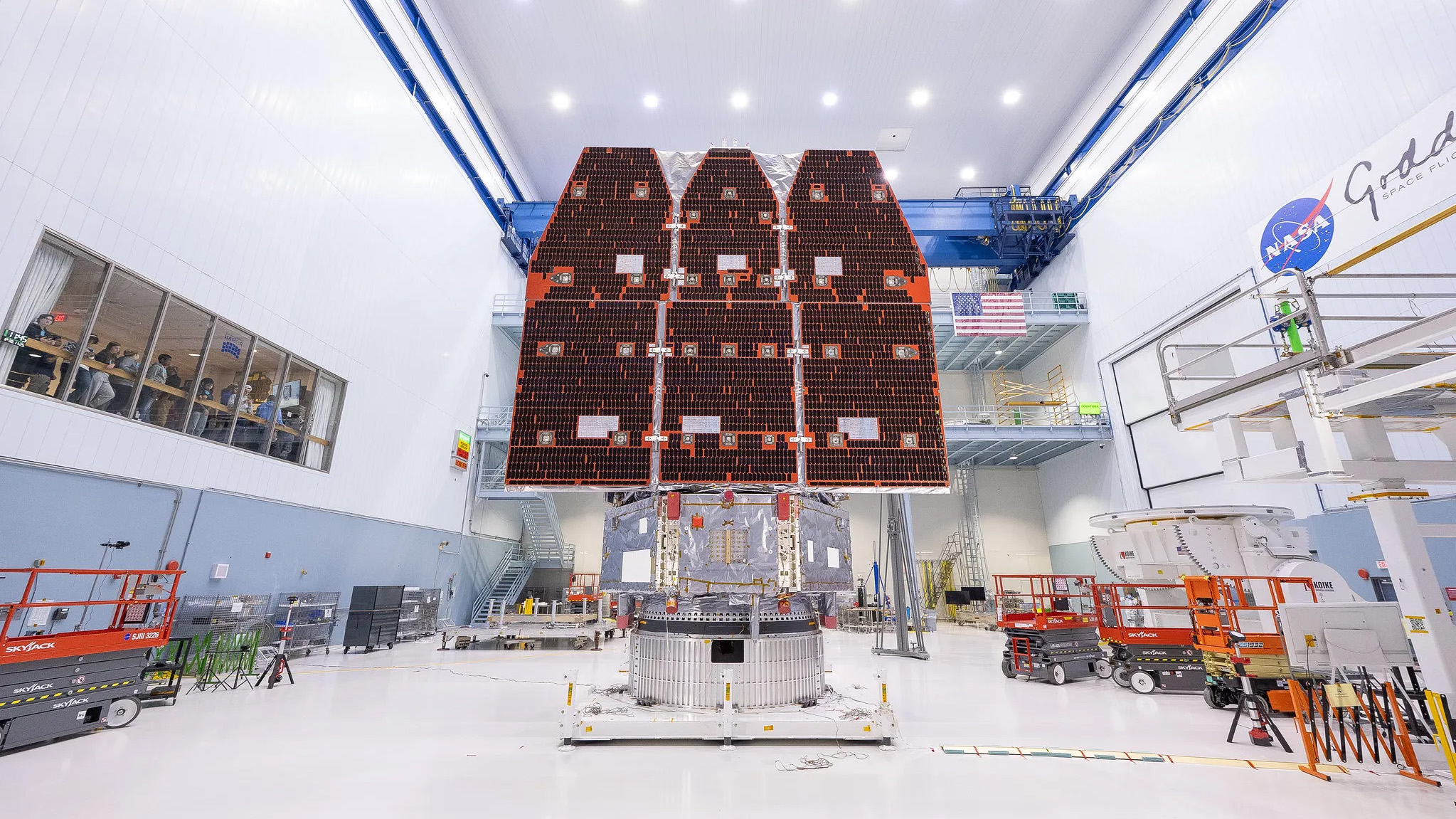
The Roman telescope, sitting inside a white NASA hangar
NASA

"Roman will work in tandem with NASA observatories such as the James Webb Space Telescope and Chandra X-ray Observatory, which are designed to zoom in on rare transient objects once they've been identified, but seldom if ever discover them," Julie McEnery, Roman's senior project scientist, said in 2023. "Roman's much larger field of view will reveal many such objects that were previously unknown. And since we've never had an observatory like this scanning the cosmos before, we could even find entirely new classes of objects and events."

After leaving our atmosphere, Roman will set course for a vantage point nearly 1 million miles from Earth. There, it will rely on a pair of instruments to study space. The first is a 300.8-megapixel camera that captures light from visible to near-infrared. There's also a high-contrast coronagraph that will allow it to capture exoplanets that would otherwise be blocked by starlight.

Roman’s mission: "to settle essential questions in the areas of dark energy, exoplanets and astrophysics." Despite decades of study, astronomers know surprisingly little about dark energy, which makes up about 68 percent of the universe’s contents. And while scientific discoveries are cool and all, you’ll be pleased to know that Roman is also sure to beam back more dazzling pictures of our cosmos.

This article originally appeared on Engadget at https://www.engadget.com/science/space/nasa-targets-a-september-launch-for-its-next-big-space-telescope-204140176.html?src=rss
Ähnliche Beiträge
🔍 Verwandte News

Auch interessante Nachrichten NASA targets a September launch for its next big space telescope

Thematisch verwandte Begriffe: NASA, targets, September, launch · 6 Treffer

Laden...

Videos werden geladen ...

Laden...

Beiträge werden geladen ...

Laden...

Videos werden geladen ...

Laden...

Beiträge werden geladen ...

Laden...

Videos werden geladen ...

Laden...

Beiträge werden geladen ...

Laden...

Videos werden geladen ...

Laden...

Beiträge werden geladen ...

Laden...

Videos werden geladen ...

Zum Aktualisieren ziehen
ZERO-DAY CVE-2026-94030 | A security vulnerability has been detected in SerenityOS up to 3d83e4509…
Advisory →
TTS Reader • tsecurity.de Voice
tsecurity.de Icon
tsecurity.de App
Offline-Lesen, Eilmeldungen & 0ms Ladezeit

Installiere tsecurity.de direkt auf deinen Home-Bildschirm für das ultimative Vollbild-Magazinerlebnis ohne Browser-Leisten.

Nächster Beitrag
Themen-Radar & Intelligence Matrix
Echtzeit-Taxonomie nach Angriffsvektoren & Plattformen

tsecurity.de Live Threat Radar

🔴 LIVE RADAR
MONITORING
AKTIV
CVE-DATENBANK
LIVE
🔍
Community Radar & Live Chat
Sentinel Bot online • Live-Stream
Dein Cluster: Security Explorer
Match:
lädt…
Verbindung zum Community-Stream wird aufgebaut...
Bearbeitungsmodus — Senden überschreibt deine Nachricht
Community-Puls — was gerade passiert
lädt…
Aktivitäten deiner Analysten
lädt…
Neues Thema oder Eilmeldung einreichen

Reiche interessante Links, Zero-Days oder Debatten ein. Die Community entscheidet per Upvote über die Veröffentlichung.

Heiß diskutierte Einreichungen
🔖 Gespeicherte Artikel
📂 Keine gespeicherten Artikel vorhanden.
Zurück Ziehen Vor
Links: vorheriger Artikel Rechts: nächster Artikel unten: schließen
News NIS-2 Frühwarnung Tier-1 Intel ⏱️ 3 Min vor 10 Min
Artikeldaten werden geladen...

Zurück: vorheriger Vor: nächster
↗ Original-Quelle
Social Reaktionen Deine Reaktion zählt
Einstufung & Relevanz-Poll 0 Stimmen
In sozialen Netzwerken teilen 1-Klick