




Apart from fixing their OS, 2026 for Microsoft was spent making Windows more attractive to developers. WSL got faster, Linux containers are now a built-in part of Windows 11, Microsoft shipped Linux-like Coreutils, and the more recent of them, Windows Developer Configurations, can turn a fresh PC into a ready-to-code machine with one command.
However, a new developer poll, spotted by Windows Latest, looks to render those efforts futile. Gergely Orosz, who runs The Pragmatic Engineer, asked his audience on X about which OS they use to build software, and got roughly 4,000 responses. macOS took a staggering 61.6%, Linux 24.2%, and Windows 12.8%
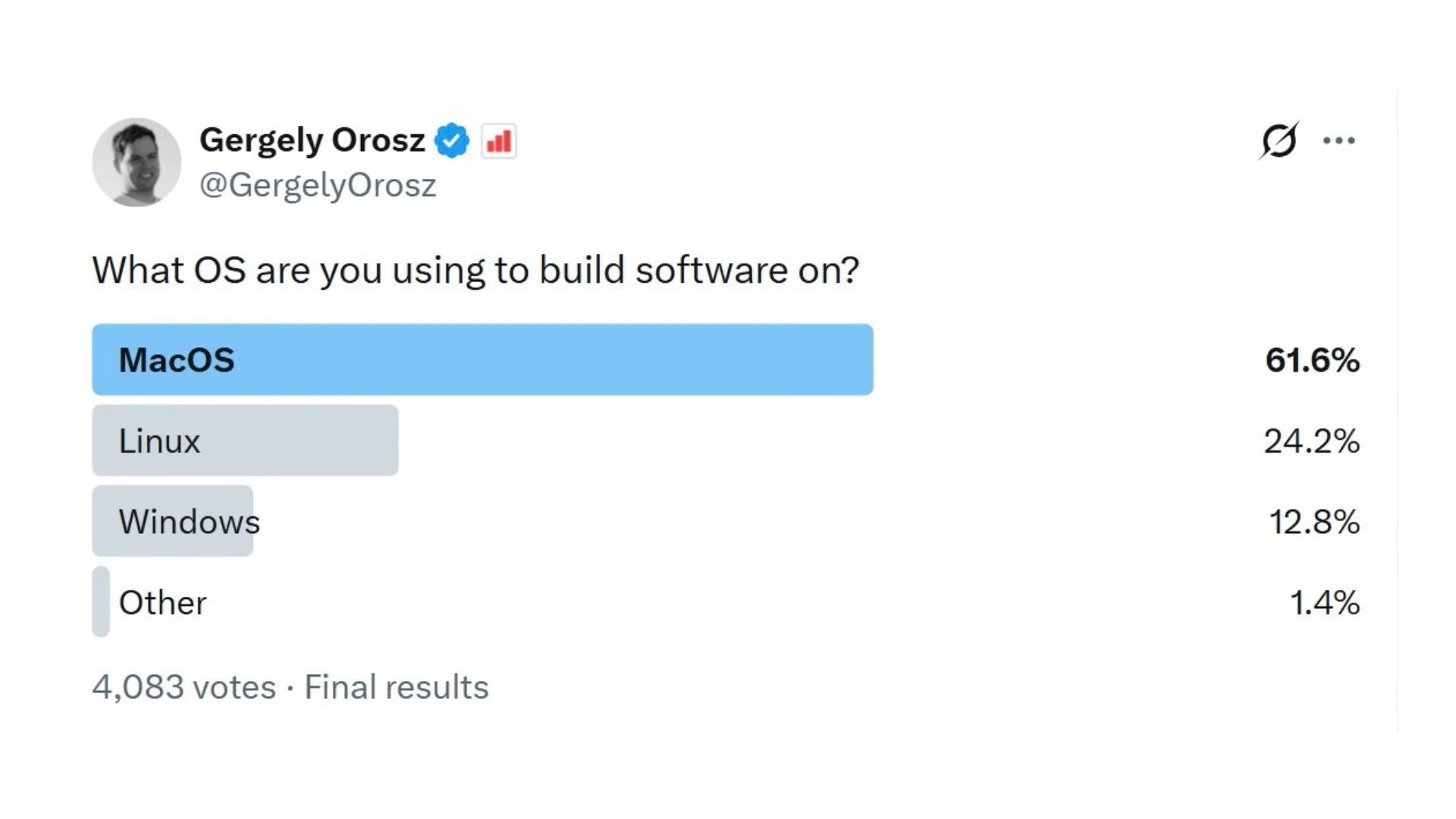
Yes, Windows came in a distant third. Another poll on LinkedIn for research for the same newsletter received 6000 votes, with the numbers being 66%, 20%, and 12%, which is similar as the ones on X.
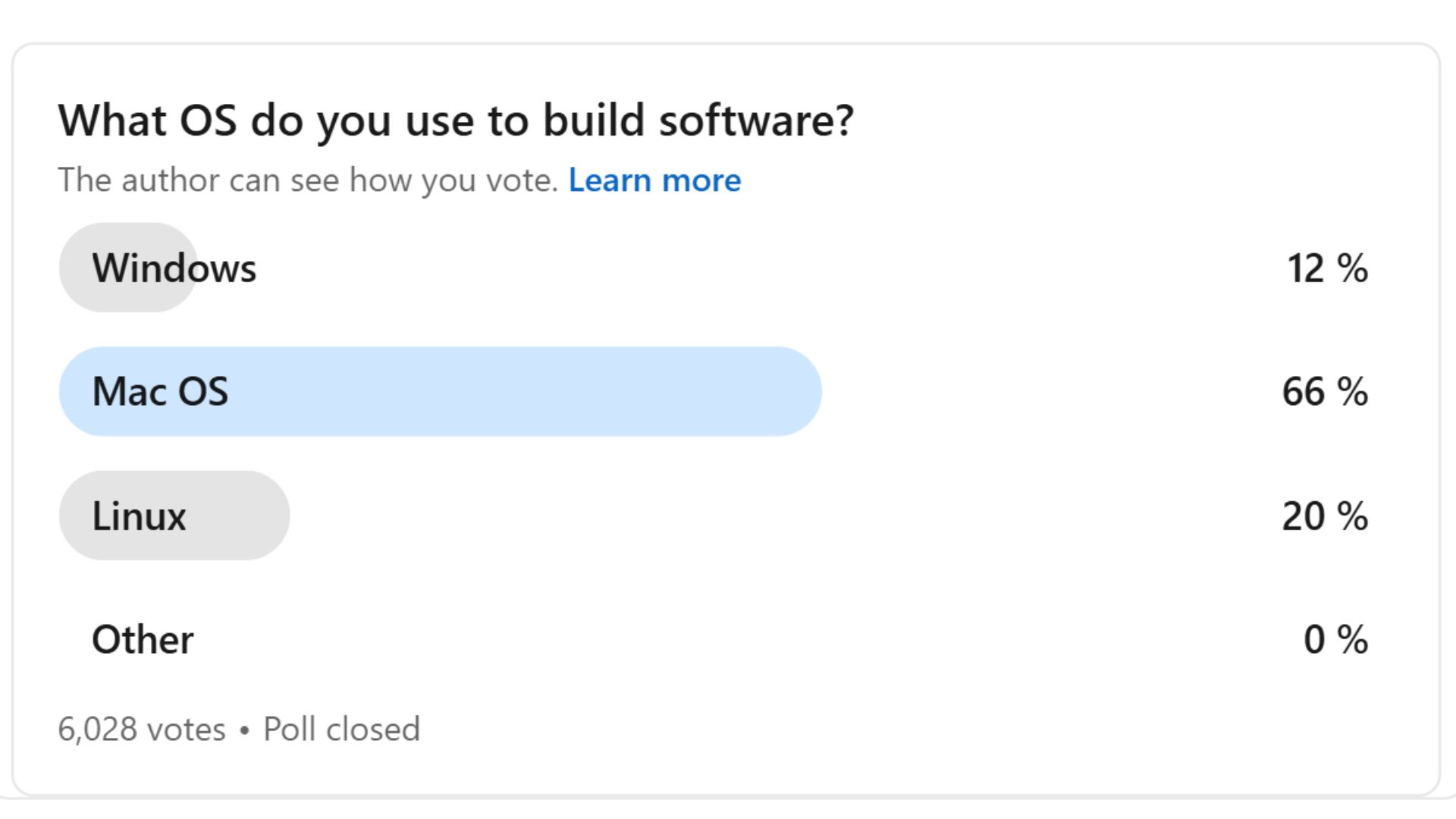
Of course, this isn’t a survey of every developer in the world. Orosz described the audience as his “bubble,” made up largely of developers at startups and Big Tech. It does not overturn the much larger surveys where Windows is still widely used.
But I feel this is an uncomfortable situation for Microsoft. Redmond is doing so much to make Windows developer-friendly, and yet the developers are still reaching for Macs and Linux boxes.
The 12% number for Windows is more of a preference than a market share
The 2025 Stack Overflow Developer Survey, with tens of thousands of respondents globally, brings us back to the real world. It found Windows to be the most widely used primary operating system among professional developers, at roughly 49.5%, compared with 32.9% for macOS.
And it being a multiple selections survey, makes it fundamentally different from Orosz’s single-choice poll. You cannot put 12.8% next to 49.5% and declare one of them wrong.
Either way, this gap between the two surveys suggests Windows is particularly weak among the highly visible startup and Big Tech crowd, even though it is still widely used across the global developer population.
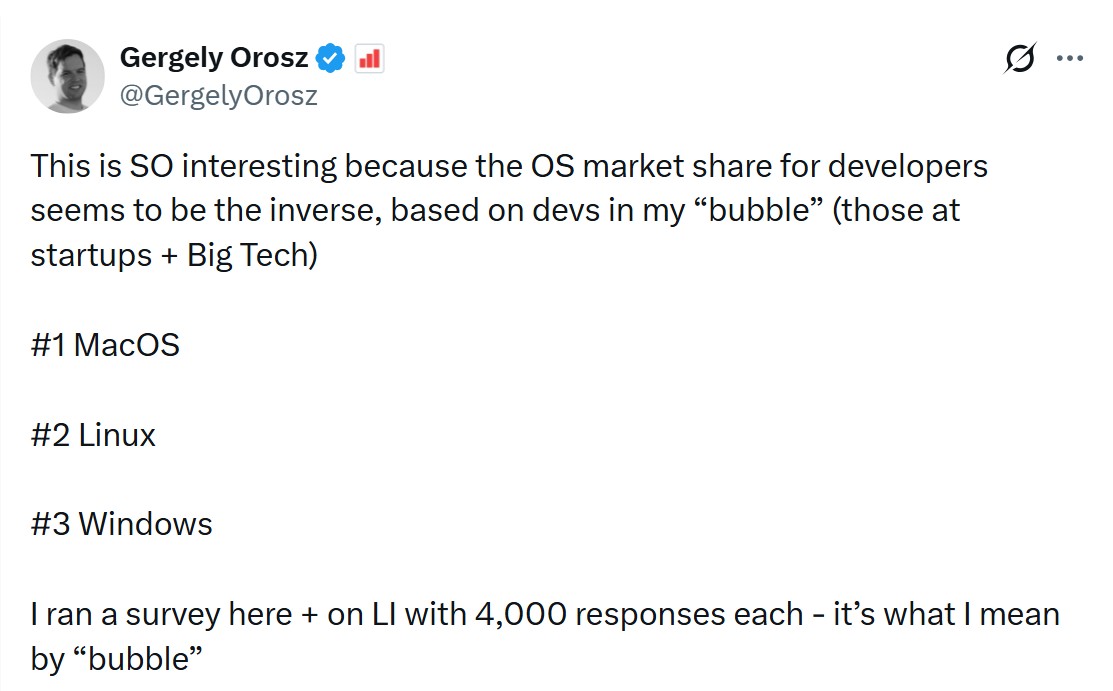
The Statcounter chart for OS market share is misleading
The screenshot posted by Omarchy creator, which was what triggered Orosz to explain his poll, shows Statcounter’s US desktop chart with Linux near 18% and Windows above 50%.
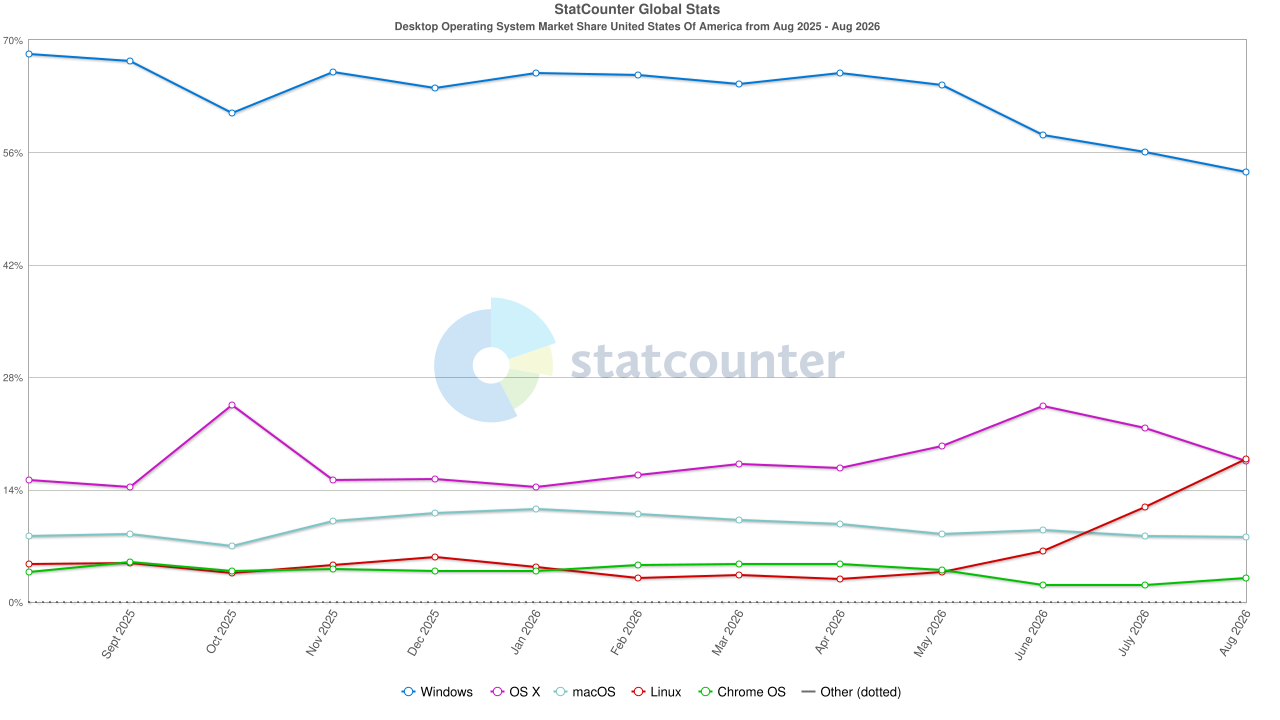
Well, Statcounter measures page views, not people or developer machines, although its methodology says it tries to remove bot activity from a sample of billions of monthly page views.
Also, Statcounter still lists OS X and macOS as separate operating systems, years after Apple renamed OS X to macOS. Windows Latest has flagged this kind of misreading before, when a viral screenshot claimed Windows had dropped from 79% to 56% in two months. It turned out to be a classification error that Statcounter later corrected, not an exodus from Windows.
We also checked a viral news story about a spike in Linux against Cloudflare’s human versus automated traffic data and found Linux at around 4.7% for human-only North American traffic, while automated traffic pushed it as high as 26% on individual days.
Why do developers keep choosing macOS and Linux?
One word: Unix
Yes, MacBooks have their charm, but more importantly, macOS gives developers a Unix-based environment with familiar command-line tools and package managers, wrapped in a desktop that mostly stays out of the way, without bloatware and upsells. It also helps that the M-series chips are the best in class at performance and battery life.
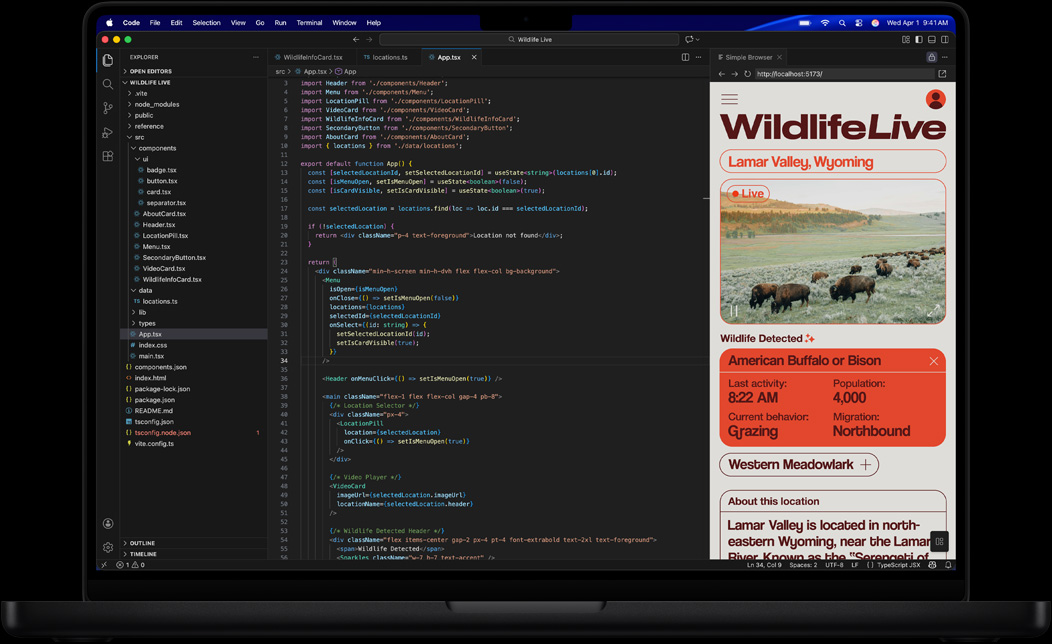
There is also Xcode that has always required macOS, and it provides the only SDKs and simulators for iOS, iPadOS, watchOS, and visionOS. For anyone building Apple-platform software, choosing a Mac is the only option. And if X posts are anything to go by, Apple users are more likely to pay for apps, and hence give more revenue to the developers.
Linux is closer to where modern software runs today
Developers working with servers, containers, cloud infrastructure, and plenty of AI workloads want their development environment to resemble the Linux environments where their software eventually ships, which explains why Linux is preferred around Docker, Kubernetes, Python, and cloud infrastructure.
Microsoft’s WSL support documents mention Linux environments, containers, and GPU acceleration, while also warning that storing project files on the Windows filesystem while running Linux build tools through WSL introduces I/O overhead.
Windows is often very good at the things Microsoft controls
Windows still has enormous advantages. Visual Studio is still one of the dominant development environments, .NET runs officially across Windows, Linux, and macOS, and Windows keeps a huge enterprise footprint along with clear dominance in PC gaming.
WSL gives developers Linux access without abandoning Windows completely, and Microsoft has poured a lot of resources into Dev Drive, Windows Terminal, WinGet, and developer tooling.
The problem is that many developers do not want Windows because they need Windows. They want a Unix-like environment, and Microsoft has increasingly responded by putting Linux inside Windows.
Microsoft is practically rebuilding Windows around developers and AI
Steve Ballmer once screamed “developers, developers, developers” across a stage. It worked then, but two decades later, Microsoft is still chasing them, though the problem can’t be any more different.
WSL is no longer Microsoft’s side project
Microsoft has spent 2026 upgrading WSL with faster file access, better networking, and easier setup, describing it as foundational for running Linux workloads on Windows, work that led to WSL Containers, a built-in wslc tool for building and running Linux containers that removes the need for third-party tools like Docker Desktop.
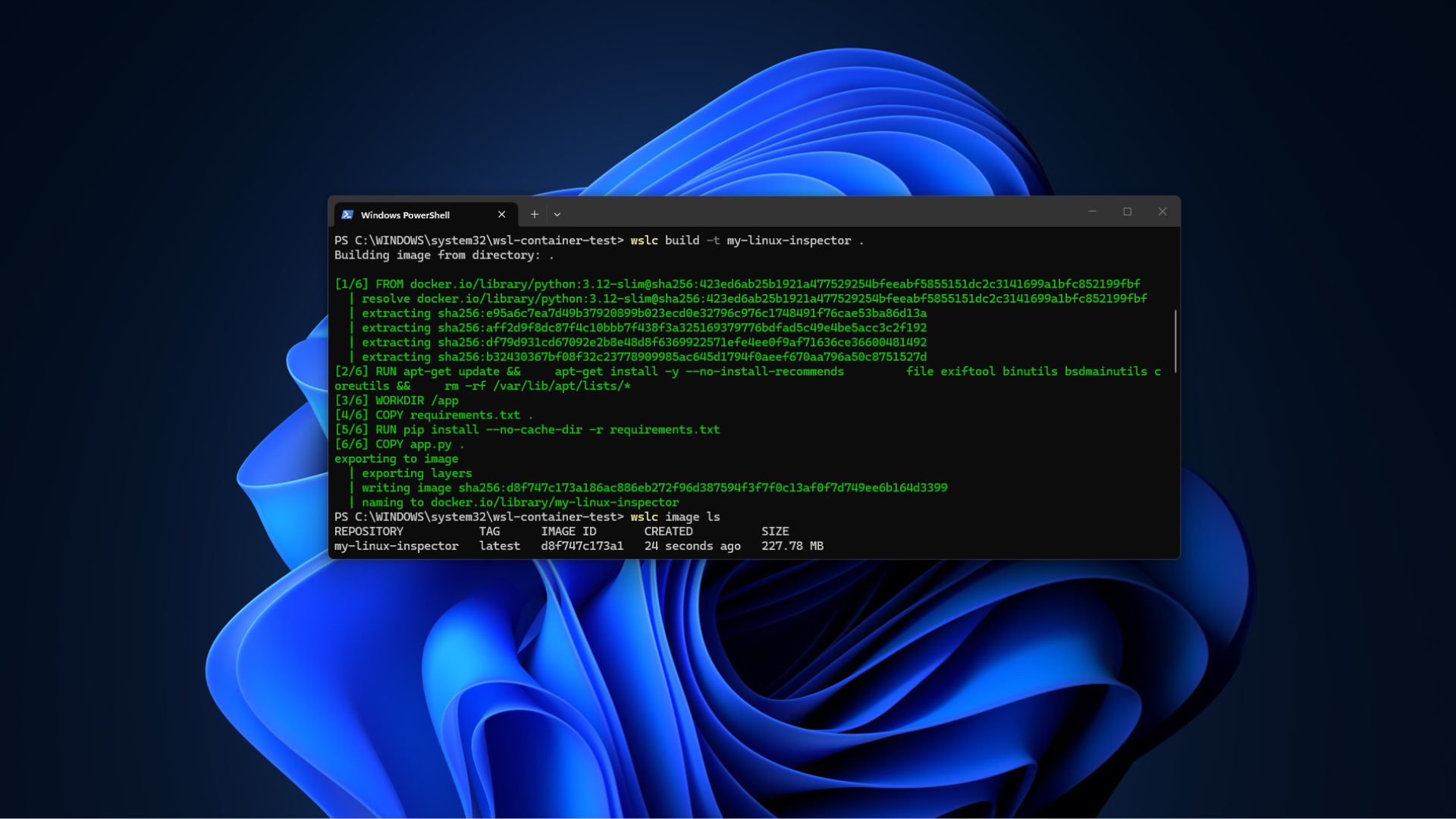
Funnily enough, Canonical’s VP of Engineering, Jon Seager, told The Pragmatic Engineer that Ubuntu usage inside WSL is growing faster than native Ubuntu desktop installs, and expects WSL to overtake native Ubuntu within months, driven largely by developers handed Windows laptops by their employers who then need Linux for AI and machine learning work.
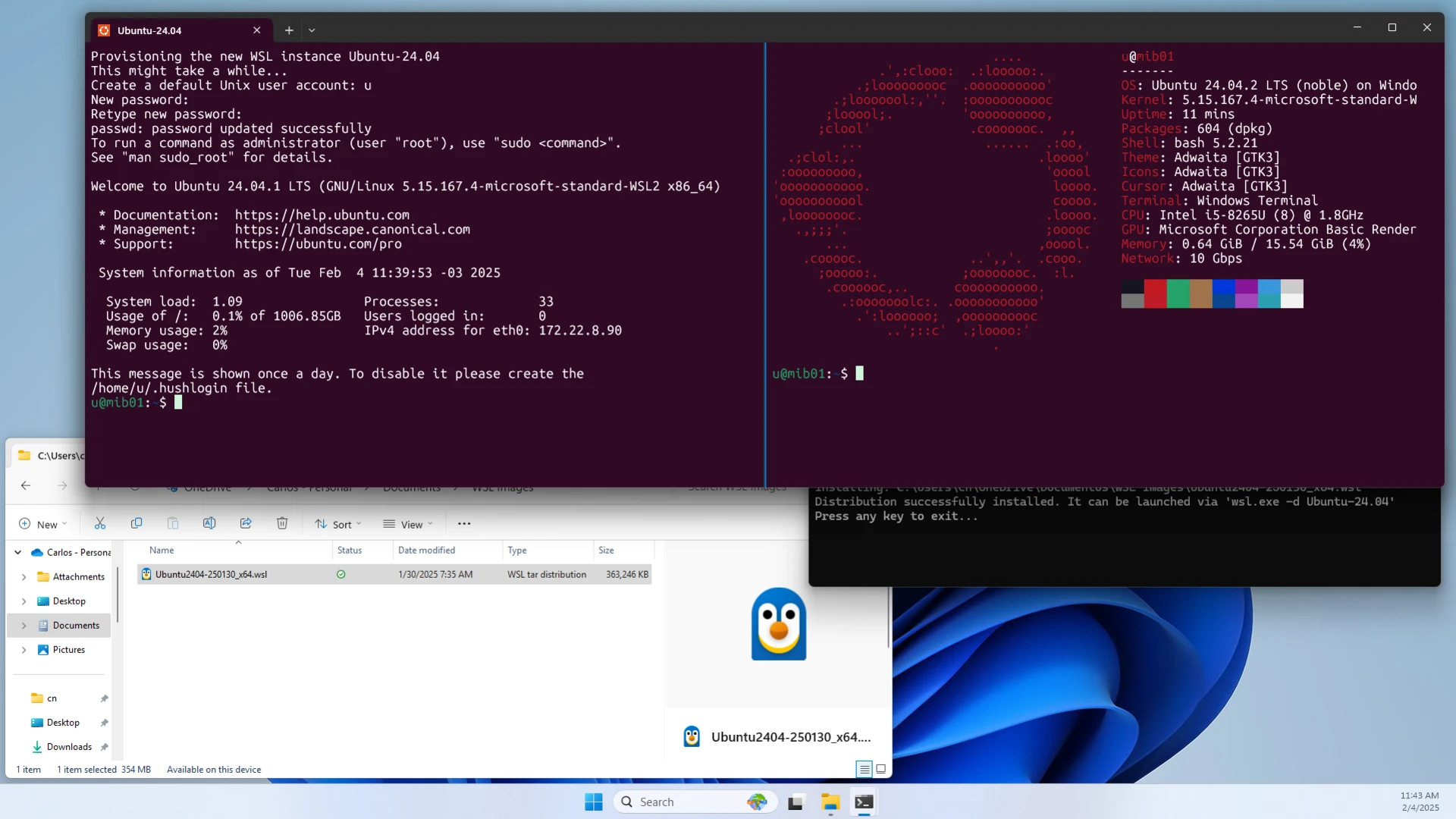
Microsoft built WSL so developers would not have to leave Windows. It may be succeeding in one sense, but the fact that Microsoft had to do this at all tells us exactly what problem it was solving!
Build 2026 went full-throttle into developer tooling
At Build 2026, Microsoft pledged to make Windows 11 the OS for building AI, shipping Coreutils for Windows (a Rust-based reimplementation of GNU command-line utilities that run natively on Windows), along with Windows Developer Configurations, powered by WinGet, that set up VS Code, GitHub Copilot, WSL, and PowerShell 7 with one command.
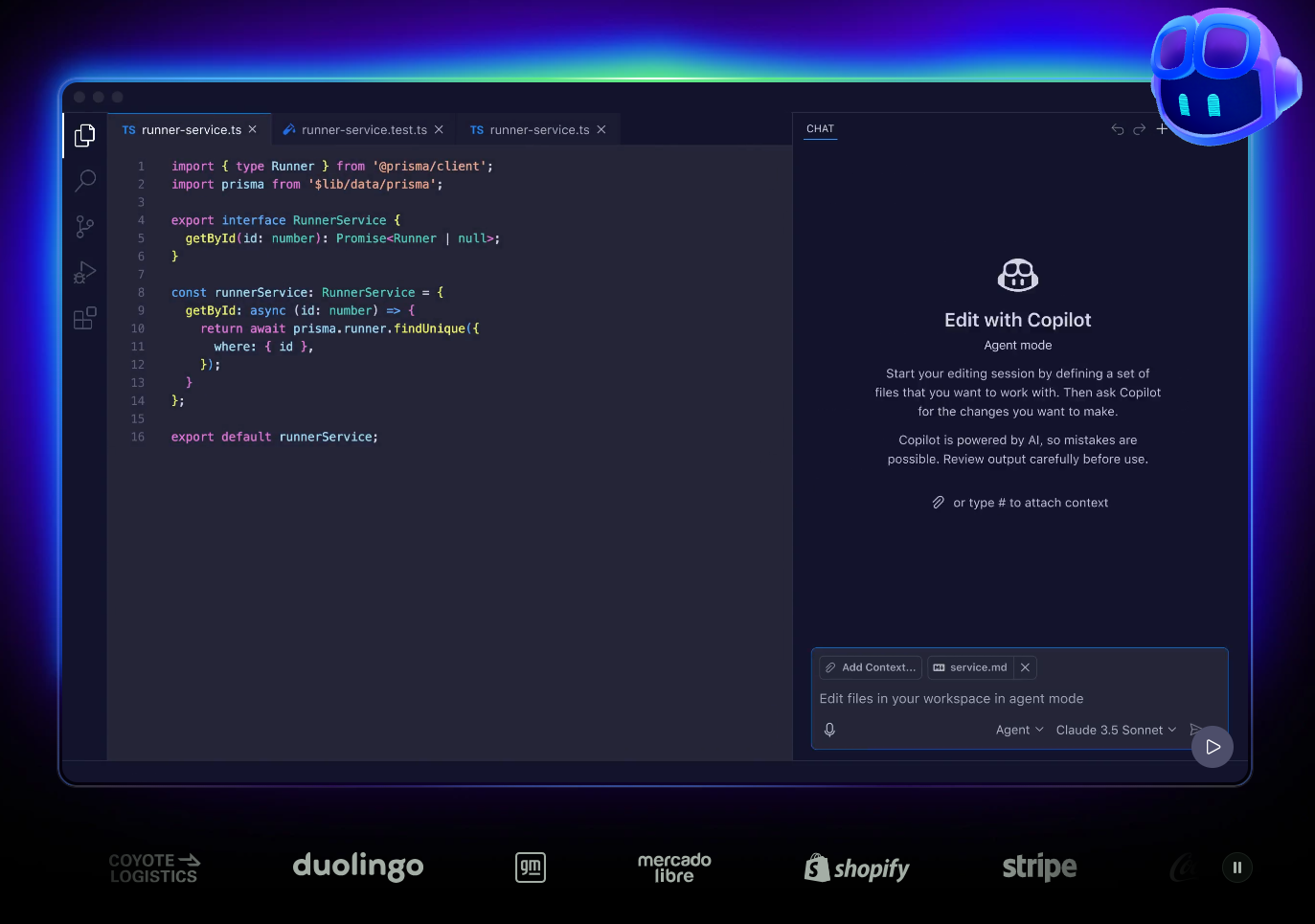
The same wave included Windows Development Skills for agentic native app development, an experimental Intelligent Terminal, and Microsoft Execution Containers, a policy-driven layer that lets developers control what an AI agent can touch on a device.
Project Zenith admits AI developers need a quieter Windows
Announced September 4, 2026, Project Zenith is Windows with different defaults, requiring at least 64GB of unified memory and 250GB/s of bandwidth so it can run 30-billion-parameter coding models locally.
Microsoft calls it “ready-to-code,” pinning Windows Terminal and VS Code to the taskbar and preinstalling GitHub Copilot, PowerToys, and Windows Dev Skills.
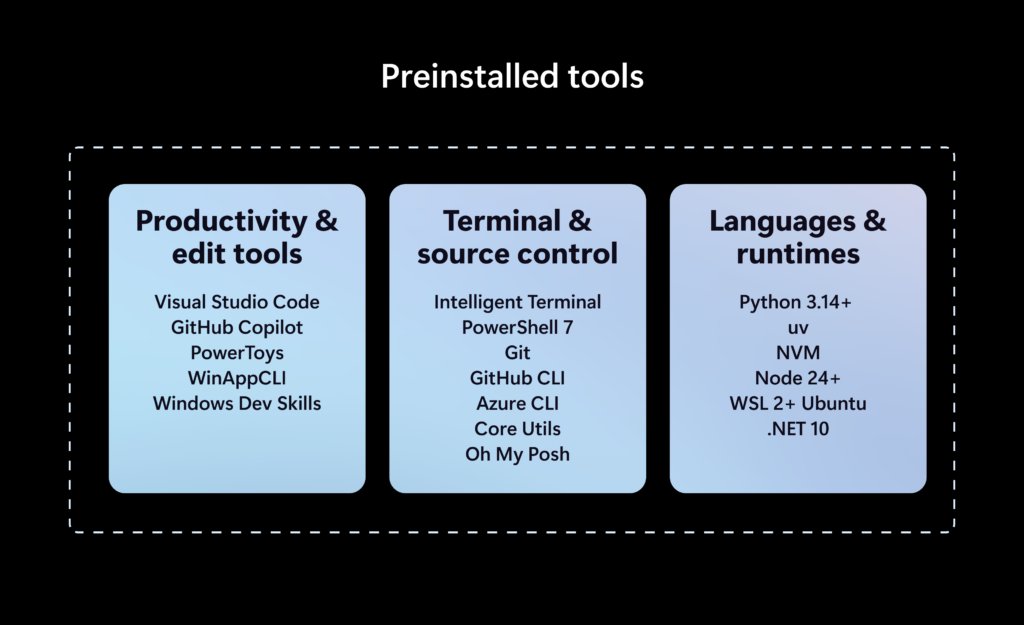
Microsoft is also throwing AI-focused hardware to lure in developers. The Surface RTX Spark Dev Box and the Surface Laptop Ultra both pair NVIDIA RTX Spark with large unified-memory configurations and CUDA support, aimed squarely at local AI development. Yusuf Mehdi has pledged to spend his final year reimagining Windows for the agentic era before he leaves, and Microsoft is expected to talk more about this direction at its October Windows event, the software giant’s first major Windows event in two years.
Contrary to popular belief, Microsoft is not ignoring developers. It is adding Linux containers, improving WSL, shipping Linux-like command-line tools, building developer-specific Windows configurations, and putting AI-focused hardware to back it all. Yet an informal poll of 10,000 votes shows that Windows is still far behind macOS and Linux.
Windows is clearly capable of being a good developer platform. The harder problem is convincing developers they should want it as their development environment.
The post Developers are still rejecting Windows, poll finds, even as Microsoft rebuilds Windows 11 for them appeared first on Windows Latest
SOCIAL SHARE CARD GENERATOR