Join us at the premier vendor-neutral open source conference, where developers and technologists come together to collaborate, share knowledge, and explore the latest innovations and advancements in open source technology. Learn more at https://events.linuxfoundation.org/
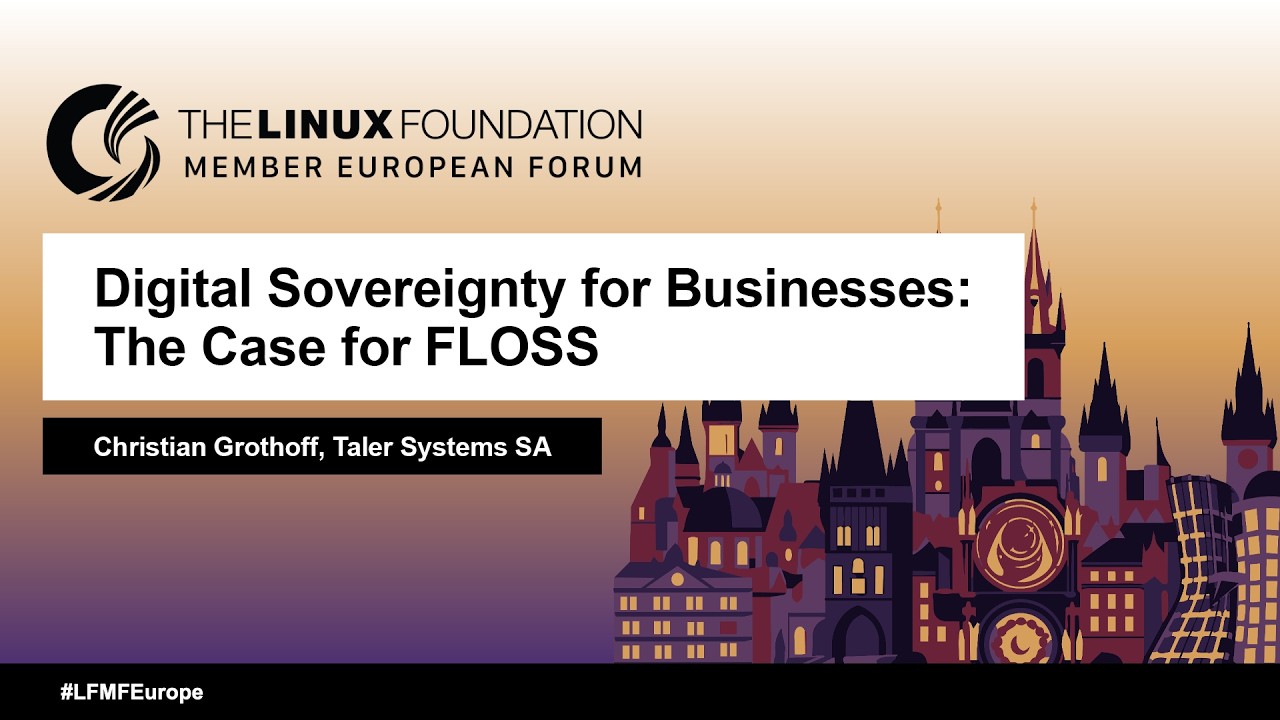
Digital Sovereignty for Businesses: The Case for FLOSS - Christian Grothoff, Taler Systems SA
Digital sovereignty has become a strategic concern for businesses of all sizes. Dependence on a small number of technology providers can create operational, economic, and cybersecurity risks.
This talk examines digital sovereignty from a business perspective and argues that FLOSS is not merely a technical or ideological choice, but a practical tool for resilience, competition, and strategic autonomy. We will explore how FLOSS helps organizations preserve freedom of action, reduce lock-in risks, improve transparency, and maintain control over their digital infrastructure.
Finally, we will examine a frequently overlooked aspect of digital
sovereignty: payments. While open-source solutions now exist across much of the technology stack, businesses often encounter proprietary dependencies at the very point where commercial activity occurs.
The workshop part is designed to demonstrate how concepts such as openness, interoperability, privacy, and freedom from platform lock-in can be applied to payment systems, and to spark discussion about what true digital sovereignty means for businesses.