



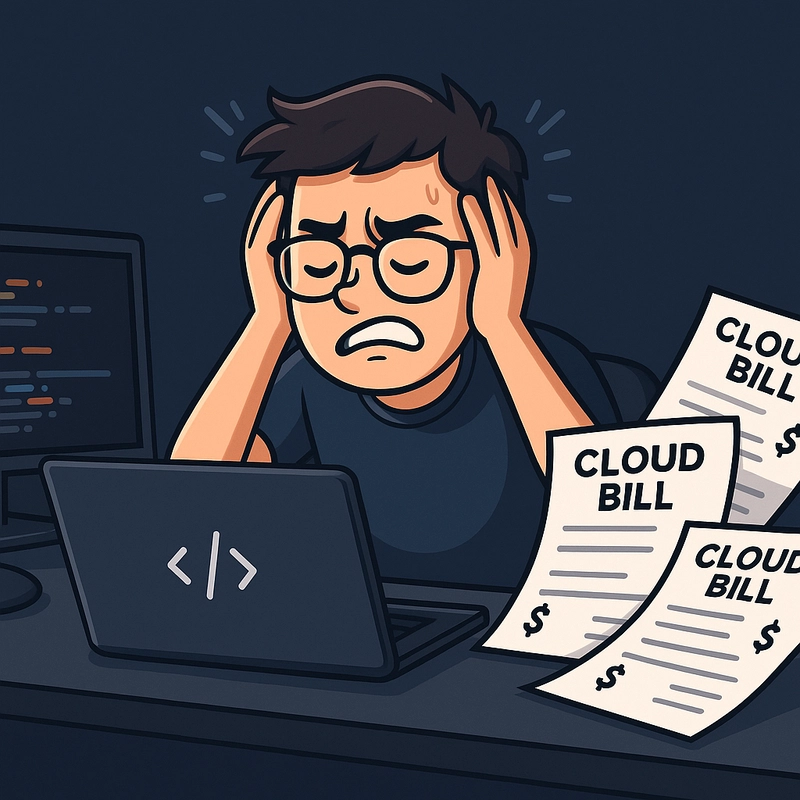
It’s a common story: a team launches their application to the cloud, celebrates the deployment and then, weeks later, is shocked by a ballooning cloud bill. What started as a low-cost, high-efficiency architecture suddenly feels bloated and unpredictable.
The truth is, most cloud cost spikes don’t come from initial deployments, they come from what happens after. And if you don’t have visibility or automation in place, it’s easy to lose control.
Here’s what’s really driving those post-deployment cloud cost spikes and what you can do to stop them with the help of Kuberns.
1. Idle resources that never got turned off
After deployment, environments like staging, dev, or feature branches are often left running. Temporary services that were only meant for testing remain active, silently consuming CPU, RAM, and storage.
Why it happens:
- No automated shutdown policies
- No visibility into underutilized environments
- Fear of turning off “something important”
How to fix it:
Use a platform that offers automated resource scheduling, idle detection, or activity tracking.
2. Overprovisioning for safety, not usage
In an effort to be “safe,” developers often assign more CPU and memory than needed. And while that works initially, it becomes expensive at scale.
Why it happens:
- No baseline metrics during initial sizing
- Defaulting to higher plans for peace of mind
- No real-time autoscaling or usage analysis
How to fix it:
Use intelligent auto-scaling or AI-driven resource sizing.
3. Logging and monitoring bloat
Observability is essential but poorly configured logging and metrics collection can quickly become one of your most expensive line items.
Why it happens:
- Log levels set to “debug” in production
- High-frequency metrics with no retention policies
- Logs stored across redundant services
How to fix it:
Enable built-in, scoped observability that ties logs to deployments and auto-purges old data. Kuberns connects logs, metrics, and alerts into a single dashboard with AI-prioritized visibility, reducing noise and storage waste.
4. Secrets, databases, and background services left unused
Cloud services like databases, caches, or background workers often get provisioned alongside web services but then sit idle, unmonitored, and still costing money.
Why it happens:
- No service dependency map
- No post-deployment audit
- Lack of billing breakdown per service
How to fix it:
After deployment, use a dashboard that shows live usage across all connected resources. On AI powered platforms, developers can start/stop individual web or database services directly and track cost-affecting activity in real time.
5. No Alerting or Cost Thresholds in Place
You can’t stop what you don’t know is happening. In many teams, cloud bills are only reviewed at the end of the month by then, it’s too late.
Why it happens:
- No automated alerts for usage spikes
- No budgets or soft limits
- No clear ownership per service
How to fix it:
Set soft usage alerts and connect cost tracking to deployment events. AI-backed platforms can correlate cost anomalies to specific commits or deployments, helping teams pinpoint the root cause quickly.
Visibility Isn’t optional, it’s the solution
Spiking cloud costs aren’t about “bad infrastructure”, they’re about invisible infrastructure. Without visibility, context, and automation, even the most efficient deployment can grow out of control.
Modern platforms like Kuberns are designed to prevent this. By integrating deployment, scaling, observability, and resource control into one system with AI guiding decisions developers stay in control of both their code and their cost.
If you want to reduce cloud waste, start by asking:
Do I know what’s running, how it’s performing, and what it’s costing, right now?
If the answer is no, it’s time to rethink your deployment platform.