Author: Evolving AI - Bewertung: 1x - Views:13
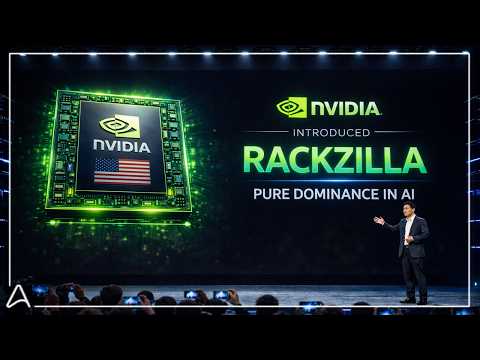
The AI chip revolution just hit a new gear, and it’s not happening in a vague “future tech” way. It’s happening in numbers, racks, wafers, uptime, and billion-dollar infrastructure bets. In this video, we connect two announcements that are really two halves of the same story: NVIDIA’s Vera Rubin platform (the next AI computing system designed to slash inference cost and power at scale), and ASML’s High-NA EUV lithography machines, finally being declared ready for high-volume production, the manufacturing breakthrough that determines what chips after 2027 can even exist. We break down what Rubin actually is (not just a GPU, a co-designed six-chip system), why NVIDIA’s NVL72 rack direction matters, and what the “token cost,” “performance per watt,” and massive memory/bandwidth claims imply for long-context AI, coding, and generative video workloads. Then we zoom out to the part most people ignore: ASML is the bottleneck of the entire industry, and High-NA EUV is how the next wave of smaller, faster, more efficient chips becomes possible. We explain why High-NA matters, what processed wafer volume and uptime really signal, why these tools cost $400M each, and how timelines from TSMC vs Intel shape when this tech hits real commercial AI chips.
Rubin locks in the present, and High-NA unlocks the future. If you want the real story behind the AI compute arms race from GPUs to fabs, this is the episode.
SOCIAL SHARE CARD GENERATOR