
Zum Hauptinhalt springen
•••
Unix & Linux ServerUSN-8994-1: libvips vulnerabilities(03.11.2026 um 18:39 Uhr)
•
Sicherheitslücken (CVE)USN-8996-1: APT vulnerability(04.11.2026 um 14:37 Uhr)
•
Sicherheitslücken (CVE)USN-8997-1: Net-SNMP vulnerability(04.11.2026 um 16:25 Uhr)
•
Sicherheitslücken (CVE)USN-8998-1: Squid vulnerability(04.11.2026 um 16:32 Uhr)
•
Sicherheitslücken (CVE)USN-8999-1: Pillow vulnerabilities(04.11.2026 um 16:49 Uhr)
•
Sicherheitslücken (CVE)USN-9000-1: Twisted vulnerability(04.11.2026 um 17:24 Uhr)
•••••
Unix & Linux ServerUSN-8994-1: libvips vulnerabilities(03.11.2026 um 18:39 Uhr)
•
Sicherheitslücken (CVE)USN-8996-1: APT vulnerability(04.11.2026 um 14:37 Uhr)
•
Sicherheitslücken (CVE)USN-8997-1: Net-SNMP vulnerability(04.11.2026 um 16:25 Uhr)
•
Sicherheitslücken (CVE)USN-8998-1: Squid vulnerability(04.11.2026 um 16:32 Uhr)
•
Sicherheitslücken (CVE)USN-8999-1: Pillow vulnerabilities(04.11.2026 um 16:49 Uhr)
•
Sicherheitslücken (CVE)USN-9000-1: Twisted vulnerability(04.11.2026 um 17:24 Uhr)
••
Intelligence View
⚡ tsecurity.de Intelligence

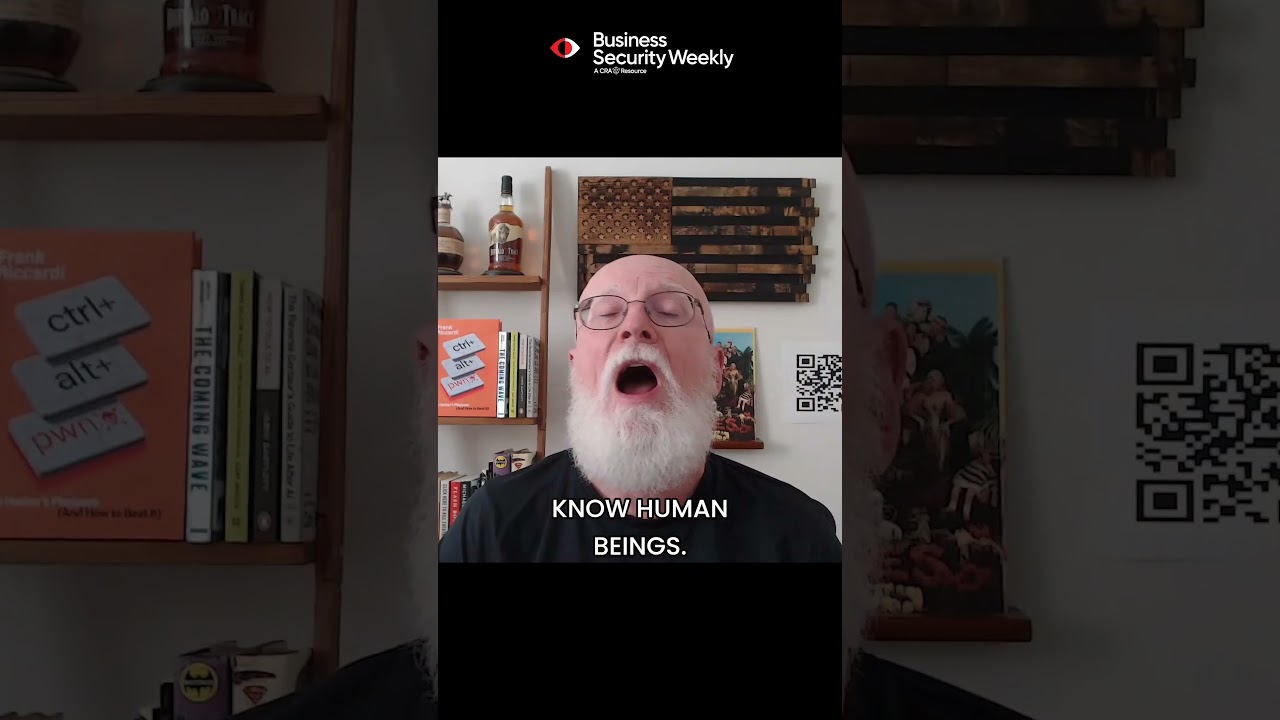
Security Weekly - A CRA Resource: Blame Users or Fix Security Systems?

HD Video
Blame Users or Fix Security Systems?
Video abspielen

Video von Security Weekly - A CRA Resource auf YouTube: People forget passwords, reuse credentials, and fall for phishing attacks. These aren't surprising…

Beitrag
0
Seite
0
↗ Quelle (Security Weekly - A CRA Resource)
Social ReaktionenReagiere als Erste:r — dein Feedback zählt!

People forget passwords, reuse credentials, and fall for phishing attacks. These aren't surprising behaviors. They're predictable parts of being human.


Frank Riccardi challenges the idea that humans are inherently the weakest link in cybersecurity. If organizations already know people will make mistakes, why are their systems still vulnerable to catastrophic consequences when those mistakes happen?


The answer may require a fundamental shift in security strategy: stop expecting perfect human behavior and start building resilient systems that account for reality.


Should cybersecurity focus more on changing human behavior or designing systems that can withstand human mistakes?


Subscribe to our podcasts: https://securityweekly.com/subscribe


#HumanError #SecurityAwareness #SecurityWeekly #Cybersecurity #InformationSecurity #AI #InfoSec
🔍 CTI & Forensik

Cyber Threat Intelligence & Forensik

ATT&CK-Navigator · IoC-Radar · Exploit-Belege
MITRE ATT&CK Matrix Navigator
1 belegte Technik
T1566TA0001 · Initial Access
Phishing
Mitigation: M1054 User Training & Email Gateway Filtering
Quelle: Kontext-Klassifikation des Artikeltextes · Konfidenz 75%
Run awareness training, review mail gateway filtering, verify SPF/DKIM/DMARC.
Initial Access
CTI Threat Relationship Graph
Akteure · Techniken · Beziehungen
3 Knoten · 2 Relationen
CVE / Incident Threat Actor Software MITRE ATT&CK CWE Weakness IoC
Intelligence Digest — free The top security news daily · unsubscribe anytime
Community Rating & Social Proof
⭐ Leser-Wertung
–
Ø / 5.0
No reader ratings yet
Was this page helpful?
0
Jetzt Bewertung abgeben
🟢 Niedrig (1-3.9) 🟡 Mittel (4.0-6.9) 🔴 Hoch (7.0-8.9) Kritisch (9.0-10.0)

Related story clusters & sources (vector AI)

Pull to refresh
Nächster Beitrag